Three plans: El Resumen Esencial for free, Premium with the full analysis and Intelligence with data and alerts to decide, in English, Spanish or Portuguese.
Three plans: El Resumen Esencial for free, Premium with the full analysis and Intelligence with data and alerts to decide, in English, Spanish or Portuguese.
Three plans: El Resumen Esencial for free, Premium with the full analysis and Intelligence with data and alerts to decide, in English, Spanish or Portuguese.
One topic in one place: the official text, the video, what happened on X, how each outlet told it and the full speech.
Ministry of Economy · Institutional
Ministerio de Economía2 min read
AI estimate · 85% confidence
Main framing
Center 50%
Center · estimated by AI · 85% confidence
The estimate comes from analyzing the story's text: which sources it quotes, which facts it highlights and what language it uses.
An AI model reads the story and estimates how much of its framing leans left, center or toward a libertarian view. The three percentages add up to 100.
This is an AI-generated estimate, not an objective judgment.
Generated on · 1 min read
AI summaries may contain errors.
The text emphasizes the reforms and economic achievements of the Government without a clear political bias, mentioning both the challenges and the actions taken, suggesting a more centered perspective.
Institutional · Ministerio de Economía
Institutional · Ministerio de Economía
Institutional · Ministerio de Economía
Institutional · Ministerio de Economía
Source: Ministry of Economy (CC BY 4.0). Translation by MileiHoy
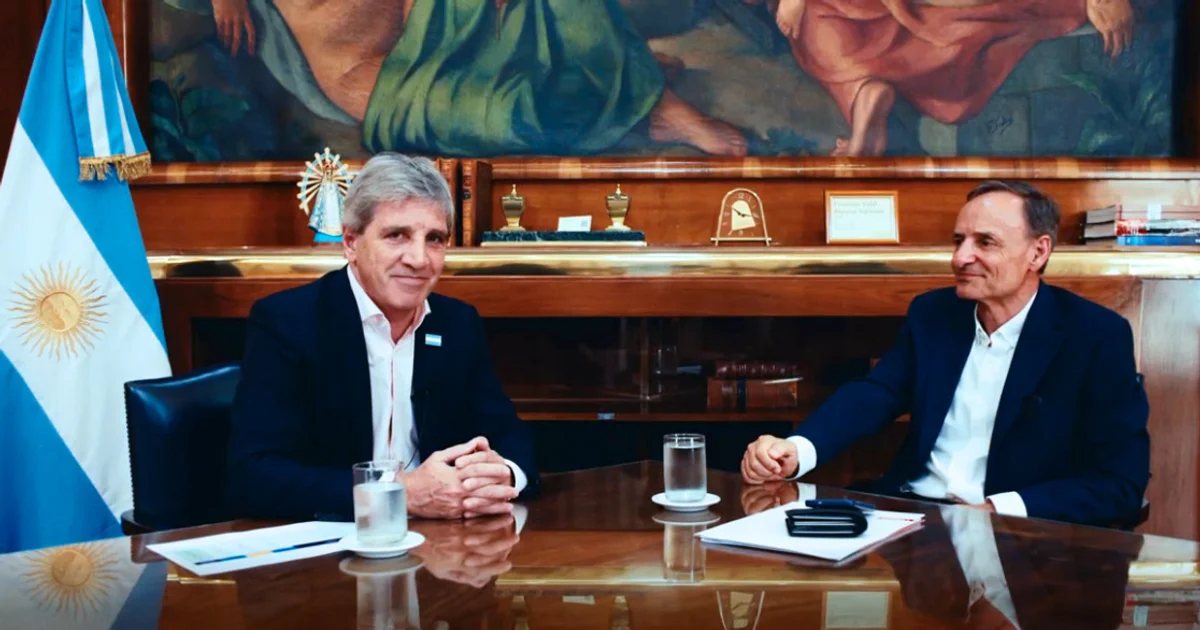
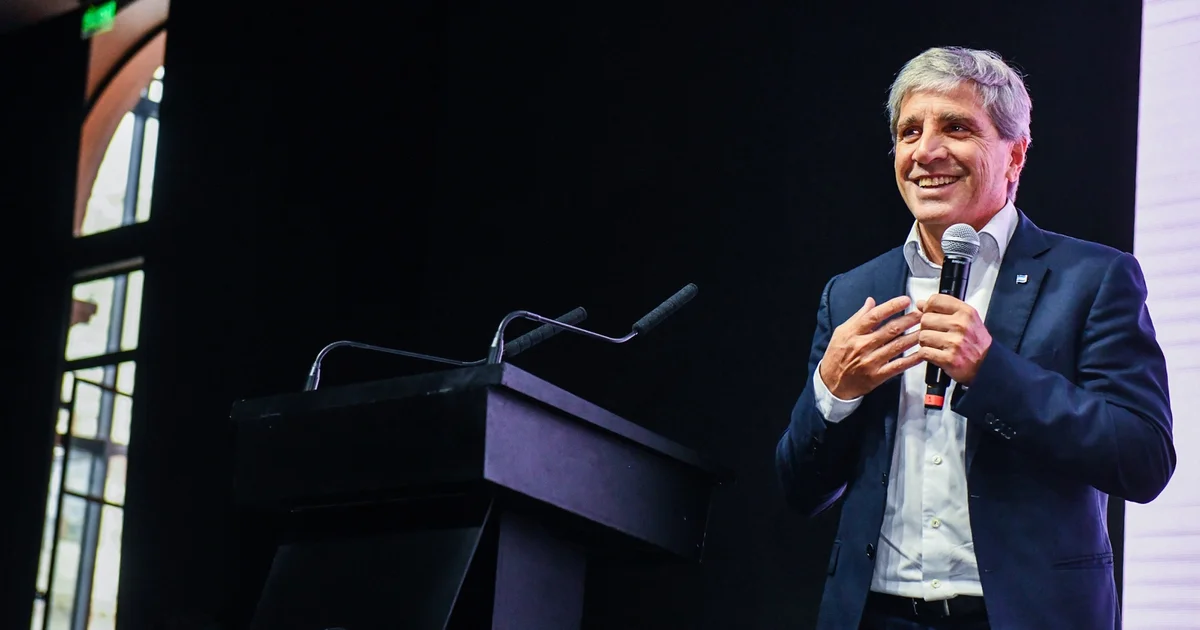
The Minister of Economy, Luis Caputo, participated this Friday in the 62nd IDEA Colloquium where he had a discussion with the president of the Colloquium, Fabián Kon. There, he highlighted the economic reforms implemented by the National Government to generate stability, economic growth, and a tax reduction.
In this context, the head of the Economy affirmed that the National Government will continue to “lower taxes, regulations, improve infrastructure and also reduce financial costs.” “We believe that this is the way to generate true competitiveness for our country and not by devaluing as some economists typically want,” he added, while clarifying that “devaluation simply means miserable wages for the people.”
Regarding sovereign risk, the Minister analyzed that “half of the increase is attributable to the international context that is affecting all countries.” He also explained that some investors have “a certain fear of going back to hell,” but clarified that “this is not the scenario we expect.” “We prepare as if it were something that could happen because it is our responsibility,” he added.
In this regard, Caputo emphasized that the National Government is currently “much more prepared, even than in October of last year, when the private sector lost almost USD 2 billion for overestimating the electoral possibilities of the opposition.”
The Minister also highlighted the role of the Labor Reform Law to formalize the labor market and affirmed that “these changes are gradual and much more in a country like Argentina that has followed incorrect economic policies for so many years.” “We have lowered employer contributions from 20% to 2%. There is practically no incentive on the employer's side to have someone in the informal sector, and this will begin to have an impact,” he added.
Finally, the Minister emphasized that in the country there is “generating predictability and stability” and stated that “twenty years of growth are coming, and now is the time to take advantage of them.” In this sense, Caputo highlighted the significant tax reduction implemented by the National Government, which has already reached three percentage points of the GDP. “At the end of President Milei’s term, we will have lowered taxes by another four percentage points,” he concluded.
El ministro de Economía, Luis Caputo, participó este viernes en el 62° Coloquio de IDEA en donde mantuvo una charla con el presidente del Coloquio, Fabián Kon. Allí, destacó las reformas económicas aplicadas por el Gobierno Nacional para generar estabilidad, crecimiento económico y rebaja de impuestos.
En este marco, el titular de Economía aseguró que el Gobierno Nacional continuará “bajando impuestos, regulaciones, mejorando la infraestructura y reduciendo también el costo financiero”. “Nosotros creemos que esa es la forma de generar verdadera competitividad para nuestro país y no devaluando como típicamente quieren algunos economistas”, agregó, al tiempo que aclaró que “la devaluación significa simplemente sueldos miserables para la gente”.
En relación al riesgo país, el Ministro analizó que “la mitad de la suba atribuible al contexto internacional que está afectando a todos los países”. A su vez, explicó que algunos inversores tienen “un cierto temor a volver al infierno”, pero aclaró que “no es el escenario que esperamos”. “Nos preparamos como si fuera algo que pudiera pasar porque es nuestra responsabilidad”, agregó.
En esta línea, Caputo destacó que el Gobierno Nacional actualmente está “mucho más preparado, incluso que en octubre del año pasado, cuando el sector privado perdió casi USD 2.000 millones de dólares por haber sobrevalorado las posibilidades electorales de la oposición”.
El Ministro también destacó el rol de la Ley de Reforma Laboral para formalizar el mercado del trabajo y aseguró que “estos cambios son paulatinos y mucho más en un país como Argentina que siguió políticas económicas incorrectas durante tantos años”. “Hemos bajado las cargas patronales del 20% al 2%. Prácticamente no hay incentivo por el lado del empleador de tener a alguien en negro y eso va a empezar a tener impacto”, agregó.
Finalmente, el Ministro hizo hincapié en que en el país se está “generando previsibilidad y estabilidad” y afirmó que “se van a venir veinte años de crecimiento y es el momento para aprovecharlos”. En este sentido, Caputo remarcó la fuerte baja de impuestos aplicada por el Gobierno Nacional, que ya alcanzó los tres puntos del Producto. “Al final del mandato del Presidente Milei vamos a haber bajado otros cuatro puntos de impuestos”, concluyó.
Full original text in Spanish, published by Ministerio de Economía.