
Oficina del Presidente @OPRArgentina
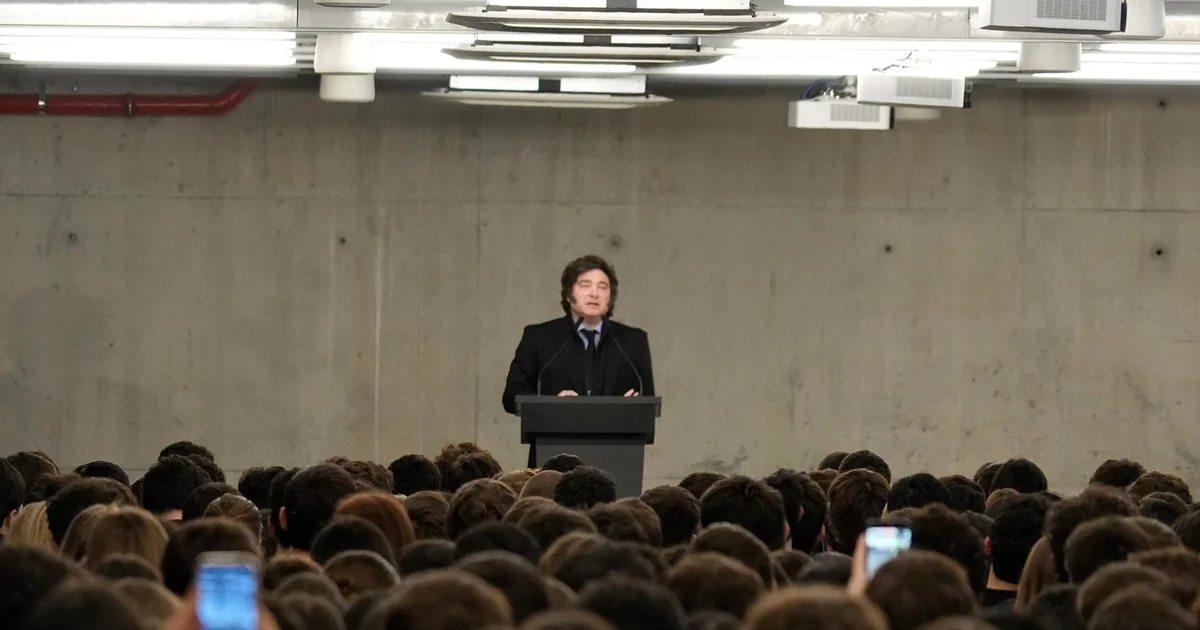
Discurso del Presidente Javier Milei en la Universidad Torcuato Di Tella.
Three plans: El Resumen Esencial for free, Premium with the full analysis and Intelligence with data and alerts to decide, in English, Spanish or Portuguese.
Three plans: El Resumen Esencial for free, Premium with the full analysis and Intelligence with data and alerts to decide, in English, Spanish or Portuguese.
Three plans: El Resumen Esencial for free, Premium with the full analysis and Intelligence with data and alerts to decide, in English, Spanish or Portuguese.
One topic in one place: the official text, the video, what happened on X, how each outlet told it and the full speech.
🔥 HIGH IMPACT · Full speech · Institutional
Casa Rosada75 min read
AI estimate · 85% confidence
Main framing
Right 90%
Right · estimated by AI · 85% confidence
The estimate comes from analyzing the story's text: which sources it quotes, which facts it highlights and what language it uses.
An AI model reads the story and estimates how much of its framing leans left, center or toward a libertarian view. The three percentages add up to 100.
This is an AI-generated estimate, not an objective judgment.
Generated on · 1 min read
AI summaries may contain errors.
The speech focuses on presenting the president's ideas and experiences without attacking opponents or praising specific government policies. The structure of the speech shows a reflective approach to decision-making and ethics.
Copied verbatim from the official speech; translation by MileiHoy.
“The first non-negotiable value is freedom. In other words, freedom is not up for discussion. We do not accept violating freedom.”
— Javier Milei · See it in the speech
“I am dangerous to the status quo. I mean, journalists hate me because I cut their official funding, because they are generally corrupt.”
— Javier Milei · See it in the speech
“Morality as State policy is actually my next book. It will be published in the second half of November.”
— Javier Milei · See it in the speech
“When we arrived, the economy hadn't grown for 10 years.”
— Javier Milei · See it in the speech
Source: Casa Rosada (CC BY 2.5 AR). Translation by MileiHoy
Speech by President Javier Milei at the Torcuato Di Tella University
Speech by President Javier Milei at the Torcuato Di Tella University. https://t.co/OSpopXFSoi— Office of the President (@OPRArgentina) October 31, 2026
Speech by President Javier Milei at the Torcuato Di Tella University. https://t.co/OSpopXFSoi
Hello everyone! If I don't start like this here, where am I going to start?
Well, first of all, I want to thank you for this invitation. I feel very honored by the organization you have made for me to come, and I am very grateful to the authorities for making this possible.
Di Tella is a place that holds the best memories for me. It was a time in my life when I had a great time, where I had extraordinary professors who have truly marked my professional life for the better. So, to begin with, the first thing I want to say is: thank you to all of you and to this house for welcoming me back. So thank you. Thank you everyone.
Regarding today's talk, basically we will do it in two parts. In the first, I will be presenting, and in the second, you will ask me whatever comes to mind literally... well, I am Milei: the ass.
That said, the topic of today's talk is morality as a State policy. That is to say, what I will discuss is how I make decisions. That is, how my decision-making process is based.
In fact, if those beings of very low intellectual ability and loaded with bad intentions, called journalists -95% of them- took a minute to listen to some of the things I say, they would understand the decision-making process and would not say the stupid things they say.
But, beyond that, as I come here and I am with people who use their brains, the process is more gratifying and more comfortable. And then you will ask me questions. That's it, it really is not a mystery.
Morality as a State policy is actually my next book. It will be published in the second half of November. It consists of three volumes. The first volume is 250 pages, where 50 are appendices of articles that provide the theoretical background on which we base our decisions. In fact, among those articles is the one we did with Demian.
Volume two is identical in format, 200 pages plus 50 of appendix. Volume one describes how I arrived at the concept of morality as a State policy. It is a collection of speeches in which I arrive at the idea of morality as a State policy, which is embodied in my speech at Davos 2026. That is, from January of this year.
And the second volume contains the speeches where I explain how this concept is applied to decision-making.
But as I said, the book has three volumes. And what's interesting is what volume three contains. Well, volume three is the log of what we did during the first 30 months of government. It is a log that basically includes each of the measures taken, in other words, a summary. And that summary amounts to 400 pages. So, it’s not that every measure is explained, it’s just the name of the measure.
That said, if you were to put it in a roll with the font size of medical leaflets, it would be 20 meters. If it were in the format of a normal font, it would be 80 meters. And if we put it in the fonts I use for speeches, for which I need ocular crutches, it would be something like more than 160 meters.
Thus, it shows everything we have been doing for 30 months. Furthermore, in December, eight more books will be published to complement it, which are from each ministry.
In fact, yesterday morning, with Dr. Sturzenegger, we finished all the details of the book on the Ministry of Deregulation. So, as you will see, it is going to be a very important work. There are 11 volumes that describe the first 30 months of this government.
So, what is morality as a State policy about? When one is faced with a responsibility like the one I have, which is to guide the destinies of a country, you cannot be involved in the details; that is impossible. In fact, it is very rare that I talk to someone who is not a minister. That is to say, generally, I only work with the ministers, which also demands me 16 hours a day. So, you can imagine that it is not a problem that... it doesn’t mean that I don’t talk to other lines. Generally, I can talk to other lines, for example, with the Economics team. Many of you know them. But it’s because it is a subject I understand a little better than the others.
But aside from that, at least in my case, what I do is determine the north, that is, where we want to go. And of the toolbox, there is a part of the set of tools that cannot be used. Literally cannot be used. It is prohibited to use certain tools.
Example: Do we want to lower inflation? Yes. Price controls? Not at all. Expropriations, not at all. Okay? And that makes sense, and I will explain that now.
When I speak of morality as a State policy, it consists of three major blocks. There is a first block that has to do with ethical and moral values. What we fundamentally call the values of the West. There is a second block that has to do with efficiency. And there is a third block that has to do with political utilitarianism.
What we say is that if these three situations, arranged from top to bottom... When politics is built with that criterion, you take the correct measures, which are efficient, which are just, and this should also generate positive electoral results. However, the reverse is not true.
Within what we take and consider as the values of the West, the foundation of what we consider just consists of four blocks. The first is the thought of the Greeks. Our main source as the West is the Greeks, where we place reason at the center of thought. In fact, when you review the various contributions made by the Greeks, the reality is that, starting from the discovery of geometry, from coding sounds in writing, the consequence of which was to place reasoning, reason at the center of everything; and that everything had to be deduced. Nothing came out of thin air.
Furthermore, reviewing one of the books on the history of the West, the advance that the Greeks had was so important that they even had the basis of what, many years later, James Watt discovered, which was the steam engine. That is to say, they had the same system and used it for managing puppets and entertaining the higher classes, so to speak. Remember that in Greece there was slavery. And they even justified slavery because they said they needed slaves to perform manual tasks so that they could engage in thought. And also, it is interesting how the Greeks presented problems, how they approached and solved problems. Each of the stories you read about the Greeks has a problem that has to be solved behind it.
One of the cases that I find most interesting is the story of Philoctetes, in the case of Troy. Let's say they had to conquer Troy. Philoctetes had been bitten by a snake, and his feet smelled a lot, but a lot, an unbearable smell. This wouldn't happen to me because I have no sense of smell. I mention this because one of those trashy types with a microphone said that one day I threw the plate at a waiter’s head because I smelled something I didn’t like, but no, I have no sense of smell.
So, so you can see how much they lie. That said, he generated a lot of stink. So, when they were on their way to Troy, Odysseus couldn't stand the smell anymore and threw Philoctetes on an island. Now, it happens that Philoctetes was the best archer the Greeks had. So, the problem was that if you wanted to attack Troy due to its characteristics, archers were very important, to shoot the arrows, the arrows with fire and all that kind of stuff.
Therefore, when Odysseus goes to consult the oracle, the oracle tells him: you cannot win if you don’t have Philoctetes. And that's where the problem appears because Philoctetes didn’t want to return unless he was apologized to.
So, this is interesting because now you have to make a decision. What is the decision to be made, in light of the fact that Odysseus threw him on an island? So, one possibility is that if it mattered so much to Odysseus to defeat Troy, he should apologize to Philoctetes and win. Of course, but Odysseus's ego wouldn’t allow that because he felt that he would lose authority in front of the others. Therefore, the truth is that if it mattered so much to Odysseus, well, live with the mistake, man. I mean, you made a mistake. Okay. You don’t want to retract. Okay. Lose.
This is very important because this happened a lot during Kirchnerism, which made a mistake and what did it do in the face of the mistake? They doubled down. That is, they tried to correct the mistake with another mistake, and that only distances them from the solution. So it is also very important what lies within the preferences of the decision-maker. Because in a person who only thinks about power, it is clear that they are willing to commit all the mistakes necessary to defend that power, regardless of the consequences for 48 million human beings.
Okay, we don’t think that way. That is, we believe that if we make a mistake, we have to correct it and move forward because dwelling on the mistake or wanting to double down on a mistake cannot lead anywhere positive.
Now, clearly, there seemed to be those two options for Odysseus: to apologize to Philoctetes, that is, to endure the cost in front of his peers, and win; or endure the consequences of having thrown him on the island and lose. Well, an intermediate solution appears. The intermediate solution is that he sends Patroclus, Achilles' nephew, to say he will apologize, takes him on the boat, and brings him back. And then they deceive the oracle and win.
The reality is that this solution is immoral because it is based on a lie. Therefore, you will not be able to build anything positive with someone like Odysseus because he is a liar. So, the reality is that it ends up being a Pyrrhic victory because yes, they won, but after that, evidently, they will not be able to sustain it. That is also a not minor issue at the moment of making decisions because you face a situation where, yes, they won a battle; but they will end up losing the war.
So, again, the role of why one wants to be here starts to come in. That is to say, yesterday I heard a fragment of the wonderful program that Julieta Tarrés does with Malena de los Ríos on Neura, where they invite a person; and it shows how distorted the values of politicians are. He says he came from academia, and that in academia, what matters is to be right. First point, in academia, what matters is not to be right, in my opinion. In academia, what matters is the pursuit of truth. And on that journey, we can be wrong or not. And all that process of trial and error is what leads to knowledge, and knowledge is what brings us closer to truth. Well, this person said that what mattered was being right, which, in principle, shows some kind of problem.
The other issue, which is not minor, is that he said that in politics, the important thing is to win elections. And I know this for a fact because I have had that conversation with that person. And that means that he is a person who is willing to lie and say any nonsense about his opponents in order to win an election. In other words, what matters to them is power. In essence, what you are seeing is an unpleasant, detestable, egotistical being, whose only concern is power. And then they say that I am dangerous… Thank goodness!
I am dangerous to the status quo. I mean, journalists hate me because I cut their public funding, because they are generally corrupt. They are corrupt. So, since I cut their official funding, they hate me. That is the first reason they hate me. Second, they hate me because they are leftists, which is not exactly my ideological position. Then there are some additional reasons for which they hate me, but those are not relevant here. However, I probably have quite a few additional reasons for them to hate me. But I’ll keep those to myself; let them discover them.
But aside from that, what I want to say is that the solution of sending Patroclus to fetch Philoctetes and deceive him is not a solution either. Because suppose that when they threw Philoctetes on the island, Philoctetes had died. So, the defeat would have been inevitable. But what I want to get at is that even if Eliseo had won, he lost. None of his peers will respect a guy who, to build a victory, has been deceiving the people. That has to end badly sooner or later. Well, this type of reasoning is found in Greek thinkers, and I find that extremely important. This is the first point.
The second point, within block one, is Roman law. That is to say, the Romans basically did not invent much. But they took everything from the Greeks, and what they said was: what we need here is order. And for there to be order, what did they do? They invented law. And that law, basically, the characteristics it has… they said that this law had to be --since they had an imperial vocation-- must be valid everywhere.
And that is how they arrive at the conception of natural law. If you look, we have continuous references to natural law. And it is not a minor issue because when a law… something can be legal and not be legitimate. In other words, I don’t care if it’s legal or not. What matters to me is whether it is legitimate. Because I could make a law allowing a certain aberration, which has happened throughout the history of humanity, and that does not make it legitimate.
That is to say, you could go against freedom, or even against life itself, put it in a law; that can make it legal, but it remains illegitimate.
In fact, in natural law, the two main rights are to liberty and to life. In fact, property is a derived right from John Locke. But if you look at the essence of John Locke, John Locke is also an heir of the Stoics; that is, he is an heir of the Roman philosophers, whose thoughts derive from Greek philosophers.
Fundamentally, what John Locke develops is the principle of original appropriation. That is to say, when you find something, if that thing belongs to no one, it is yours. Or if you find something and you mix it with your labor, that thing is yours. Well, these issues are not minor. Why? Because that will have to do… it will play a very important role in block two, which concerns efficiency.
The third point relates to the Stoics, the role of the Stoics. For us, the Stoics are a guide. I mean, the best example of a Stoic thinker… with many people studying economics here, or some branch of economics… our main Stoic economist, who is it? Adam Smith. Adam Smith had a course that was a course in moral philosophy. That course had four parts. There was a part on theology, where Adam Smith did not express much about it because religious controversies at that time in Scotland did not end well. In fact, David Hume himself, who was a very good friend of Adam Smith, suffered quite a lot from that issue due to some reflections. Others were directly ended up assassinated or executed. Therefore, Adam Smith was quite wise in that regard and avoided getting involved in that problem.
On the other hand, he had a second block, which was the part of ethics and morality, and in that, he developed a book for that part, which was The Theory of Moral Sentiments. And in The Theory of Moral Sentiments, in the last chapter, which is chapter eight, he presents a chapter on virtue.
Virtue basically does not differ much, for example, from what King Solomon asks of the Creator when inheriting the throne from David, which is to ask for wisdom to distinguish between good and evil, courage to choose good, temperance to stay on the right path; and when it comes time for him to wear the shoes I had on, justice, to make just decisions. In the case of Adam Smith, the topic of wisdom, he calls it prudence, but the concept is basically the same. Regarding courage and temperance, he synthesizes it into self-command, which would be something like self-control. Of course, he emphasizes the role of justice and then adds benevolence. That is, he also takes four virtues, except that he places courage and temperance within self-command.
So, benevolence… but benevolence is very interesting, how Adam Smith viewed the issue of benevolence, that is to say, charity is with one’s own, not with others. There is a wonderful phrase by Murray Newton Rothbard. He says: it is incredible how generous one can be and charitable when the pocket is someone else’s. Well, Adam Smith already had that clear. Furthermore, when you look at part 3 of Adam Smith’s course, which was political economy, for that part he wrote this famous book called The Wealth of Nations.
For us, the known, The Wealth of Nations as dad. Because from there the economy was born as a formal science. I’ll let you know that the Greeks already analyzed these things, too. I mean, go and read Xenophon and the guy was clear on even the notion of intertemporality and how to create wealth… You may have heard that phrase that says the eye of the master fattens the cattle. Well, that’s from Xenophon, meaning that the Greeks understood these things very well.
But the interesting thing is that this development by Adam Smith regarding the economy is not unrelated to moral issues. This is no minor topic. Generally, we do not explore it this way, but we should consider Adam Smith’s entire work to be clear on what Adam Smith sought in that book. And not only that, it is also very useful to understand what was being discussed in the Scottish Enlightenment, what their approaches were, what was being debated at that time in Scotland, because that allows us to understand how these great thinkers thought.
That said, furthermore, that book, the fourth book, is about jurisprudence. It is not jurisprudence in the terms we understand today. One of the things I suggest to those who from now on want to read Adam Smith: Adam Smith was a person of a very important level of erudition and was obsessive about the choice of words. So, do not believe that the terms used by Adam Smith are perfectly assimilable to what we think today.
One of them is jurisprudence. Adam Smith was drafting his book on jurisprudence. Basically today it would be what we study in philosophy of law; for Adam Smith jurisprudence, to put it plainly. But he did not finish writing it; he asked his friends to burn that book. Indeed, that group of friends burned that book, but the notes remained, and from there it was possible to reconstruct what Adam Smith did.
There were also another set of essays that he asked other friends to burn, and they did not, and those are also compiled, which is where we also understand that Adam Smith was someone who understood a lot about mathematics. I mean, he knew about mathematics. Adam Smith was clearly a fan of Newton, not just a bit; he was a true Newtonian. In fact, he wrote an article on astronomy, and this is important because it relates to the nature of the model he develops in The Wealth of Nations and why he felt compelled to create the labor theory of value, with all the problems that it later brought.
But he was clear that trees do not grow indefinitely and using the hypothesis of increasing returns, that is, under the metaphor— which was not so much a metaphor, as it was from practical observation— of the notion of the pin factory.
Moreover, if you stop at the moment of Adam Smith's work, or if you want to move a few years later and look at Malthus and do the econometrics, econometrics, who would it have sided with? Malthus or Adam Smith? I’ll let you know that the econometrics would have overwhelmingly favored Malthus, not Adam Smith. And it would have favored all the techno-pessimists at that time. But there is also a very important fact, because the steam engine developed by James Watt, the one who made a place for him at the university to do so, was Adam Smith. So Adam Smith not only saw it, but also saw how science evolved, and it’s not a coincidence what he did.
Leaving behind the Stoics, then, what is the role… what is the fourth point? The fourth point is Judeo-Christian values. And this has two dimensions: it has a dimension about what is just, and it has a dimension about freedom.
The dimension regarding freedom is: both in Greece and in Rome, there was no place for freedom, and they needed slaves as a mechanism for production. But what happens: being slaves, they did not care if they had to use one, two, two hundred… it was the same for them. In other words, for both the Greeks and the Romans, slaves were comparable to a machine. And that made them indifferent to the level of productivity; there was no concern regarding productivity.
In fact, they only confined them to manual tasks, operational tasks, solely aimed at satisfying the needs of their owners. This is no minor issue, because that contempt for manual arts is what makes, for example, that in Greece they had the foundations of the steam engine and did not develop it to be more productive; they developed it to create a machine that served to entertain these people with puppets.
So, what is the role, if you will, of Christianity or Judeo-Christian values? Their emergence fully occurs between the 3rd and 4th centuries. It is the idea that we are all created equal, that we are all equal before the law, that we are all children of God, that we all have inalienable rights; thus, freedom becomes a value.
Given this situation, the perception of slaves changes, and freedom begins to gain ground; and as freedom starts to gain ground, all those manual activities begin to be valued. Commerce takes on a fundamental role, for example, which was previously a despised activity. Then, many activities start to flourish. In fact, during the Middle Ages, which is thought of and seen as a dark age, it is full of inventions. Moreover, this whole concatenation of inventions leads them to the paper and the printing press of Gutenberg. And when the printing press of Gutenberg arrives and knowledge begins to spread deeply throughout the world, the natural consequence of this is that the Renaissance appears.
That's why, when the Renaissance appears, and you go back to the Greeks and back to the Romans, the Stoics reappear. Then, in that line, you have, for example, John Locke again. And in that same line, you have Adam Smith. In fact, Adam Smith himself spoke in ancient Greek and conventional Greek. He read Greek authors in the originals. And he was a fan of how they constructed words. Adam Smith was quite an obsessive character. You can imagine that this is not something for which I will criticize him. So, there, in that context, the arrival of Christianity allows for the opening of the doors to freedom. And that is what later brought about the explosion of wealth creation.
Another way to look at this problem is that we generally do not accept moral relativism regarding some parameters, to put it in some way. So, this moral relativism that we do not accept does not mean we would think to go to India and say, hey, go and eat beef, eat cows. We would never think of such a thing. We are not talking about nonsense. I mean, I’m crazy, but I don’t eat glass, okay? Or I wouldn’t think of going to an orthodox Jewish community and telling them they should start eating ham sandwiches. I mean, we’re not thinking of that kind of nonsense. We are thinking that there is a set of values that are non-negotiable.
The first non-negotiable value is freedom. I mean, freedom is not up for discussion. We do not accept violating freedom. That’s the first point. We also do not accept murder. That is to say, respect for life is not up for discussion. Respect for property is not up for discussion. I mean, you shall not steal. And the word is not up for discussion. That is to say, you shall not bear false witness. If you look at this set of values, freedom, life, property, and the word/contracts, that is already expressed in the Ten Commandments.
That is to say, when you read the Torah, let’s say, in the Pentateuch, which are the first five books, in the second book, which is Shemot if you want it in Hebrew, in Spanish it’s Exodus, which is the most important liberating feat in the history of humanity; because a couple of brothers stood up to the Pharaoh, who was the equivalent of the sum of the United States, China, and Russia, it would be the equivalent today, and two brothers stood up and said: hey, let my people go.
Aside from that, in the Parashah Yitro, which describes the moment when Moses goes up Mount Sinai and then comes down with the tablets, you will find there, within the Ten Commandments, these four points that I am telling you, are inside. In fact, the first commandment is a proclamation of freedom, because it says: I am your God, the one who brought you out of slavery, the one who brought you out of Egypt. That is to say, the first commandment has a mandatory reference to freedom. Let alone the you shall not murder, you shall not steal, or you shall not bear false witness. So, these values are non-negotiable. And when one is going to take a measure of economic policy or public policy, these values are not subject to discussion.
When we decided to undertake the stabilization program, facing the five points of fiscal deficit in the Treasury, the decision was not to raise taxes; the decision was to reduce public spending. Essentially because we believed that the fiscal deficit was immoral. Because if I have a fiscal deficit, I have to finance it. And if I finance it with debt, it means that today’s party will be paid for by my children, my grandchildren, and even generations that haven’t been born yet.
That is to say, it is an aberration, it is an immorality. Debt is something truly dreadful. I mean, not in the case of an individual, in the case of the company… but yes as an element of the State, because the State finances itself with taxes, which is a coercive source of income. That is to say, why are they called taxes...? I refuse to call the taxpayer a “contributor.” No, no, no, they are taxpayers. And taxes are theft.
And I say this as Head of State. Therefore, not only have we lowered public spending, but we have lowered it to the extent that we additionally reduced more than three points of GDP; we lowered almost four points of GDP in taxes.
If we manage to maintain our program and the Argentines decide to support us next year, until 2031 we would be returning to Argentines 500 billion dollars in tax reductions. That indeed is freeing them from the burden of taxes, which are theft.
Now, it’s not just about debt, because the other could have been to issue. Issuing money is also debt, it is the Central Bank’s debt. Therefore, it is not true that it is not debt. Yes, it is debt. And what it generates is a falsification, it is a scam. And that is also wrong because it is stealing. That is to say, if I have an economy that moves with gold coins, and suddenly a friend comes and finds a way to transform plastic into gold without anyone noticing, and I start grabbing plastic and turning it into supposed gold, and I throw it on the street and exchange it as if it were gold, I am defrauding them. Well, for us, to defraud is wrong, to steal is wrong. Therefore, financing the deficit with monetary emission is a scam. Moreover, that generates inflation, and it is an absolutely regressive tax because it hits hardest those who have the least.
Now, we arrived and there was a quasi-fiscal of 10 points of GDP. I mean, how did this disreputable Cavallo fix it? Because since he likes to criticize, let’s talk and lay the truth on the table. It’s very easy. Do you know what Cavallo's recommendation for that was? Expropriate. Of course, he brings a tradition of expropriating. He nationalized the debt in '82, of those who had gambled with the exchange rate, in order to save. How interesting. He used all Argentines to pay for the rescue of those who had gambled with the dollar. It seems morally questionable to me. I mean, if you want to go to the casino, go to the casino. Now, if you lose, you shouldn’t pass the bill to someone else. That’s what he did in '82.
Before taking office as Minister of Economy for Menem, he demanded Erman González to implement the Bonex Plan. That stabilizes anyone. Imagine if I had taken the four monetary bases that were due daily at the Central Bank, and the ten monetary bases that the Treasury had in peso due every day, that is, fourteen monetary bases, I could have multiplied the amount of money by fifteen in a single day. Of course, the easy way is what Cavallo did, expropriate. Of course, that stabilizes anyone.
Of course, we were six months in the market rowing to clean up the Central Bank’s balance sheet in the market. We did not violate a single contract. Why? Because property is respected. This disreputable person charged all Argentines the bill of his business friends in '82. Before, he imposed a Bonex Plan on all Argentines in '91, and in 2001 he set up the corralito. It’s interesting to talk about the freedom of this person when he is responsible for the three largest expropriations in Argentine history. Do you understand why sometimes one, let’s say in plain language, gets heated about these things?
One of the things that usually happens to me is that when I do interviews abroad, you see there is a saying that says nobody is a prophet in their own land. I experience that daily. Abroad, they treat me wonderfully; here, everything is a reason to hit me. And if not, they make it up. But well, that’s another problem.
So I am often asked this question: What recommendation would you give to President X? And the reality is that I can’t give any recommendations to any president in the world. Because basically, the electric chair one sits on is absolutely idiosyncratic. So who am I to give a recommendation on what they should do in country X, Y, Z? They have a lot of cultural tradition issues that one can arrive at giving a recommendation could be saying an absurdity the size of a house.
But at the same time… Furthermore, if you have heard me, one of the things I say is, either it ends in 2027 or 2031, after that I’m going to lock myself in a field and you won’t see me anymore. I’m going to dedicate myself to giving lectures, I’m going to stay with my four-legged kids. No more. Because, moreover, it’s not only idiosyncratic the electric chair of each country, but it is also idiosyncratic the chair itself. Therefore, under no circumstances could I be giving recommendations to my successor, whether in 2027 or in 2031. I hope it’s in 2031 because that way I keep accelerating with the reforms, but again that will be decided by the Argentines. But beyond that, it is absolutely idiosyncratic because the restrictions I face are not the ones my successor will face. Therefore, it’s quite… I don’t know, inappropriate.
If you look closely, in fact, I don’t make references to what each government had to do. I arrived, I had the mess I had and I went and solved it, nothing of crying. In fact, you see that I think the debt is so immoral that from nearly 550 billion dollars today it’s about 525 billion dollars. The total dollar debt has decreased, the consolidated one. Obviously, the “K” never account for the debt of the Central Bank. Evidently, they were either thinking of defaulting it, or they were thinking of a Bonex Plan or they were thinking of generating a monetary emission bubble to bash us with hyperinflation.
I don’t know what they were thinking, but beyond that, what counts is the consolidated debt. Furthermore, if you look, of the debt that exists today, 50 billion dollars come from the fact that the inflation rate beats the depreciation rate. And that causes the debt that adjusts by CER, by inflation, to rise in dollars. If not, there would be 50 billion dollars less debt still. But well, those are the instruments that were available. So we don’t cry over that.
Having said this, let’s go to the issue... Oh, well, there was another option regarding the deficit. Yes, there was the option to raise taxes. Well, not for us. In fact, we lowered them. So the only alternative was to reduce public spending; there was no other option. In fact, the true fiscal pressure that a government faces is the size of public spending. So, you will have to finance it somehow.
That said, let’s go to the issue of efficiency. Efficiency has two dimensions. There is static efficiency and there is dynamic efficiency. Regarding static efficiency, that’s where my conflicts with one of the guys I detest the most in economic theory, Wilfredo Pareto, appear. In fact, Pareto's developments were what were later used as the basis for populism. The distribution of income, for example, which takes the form of a chi-squared, a log-normal or Pareto distribution, shows that the median is below the mean.
More or less, I mean, below the average comes between 70 and 80% of the population. So, if you do politics saying that you are going to take from the rich, let’s say the top 20%, to give to the poor, you are..., the idea of social justice is aimed at winning the favor of 80% of the population. Well, that is profoundly immoral, that is the idea of social justice. It is theft because you are robbing the 20% to give it to the 80%.
And it also implies unequal treatment under the law. Which means the idea of social justice is a horror, it is a moral aberration. Moreover, in fact, it goes against Sacred Scripture, because as far as I know, we are all equal before the law and stealing is wrong, as a concept. Therefore, social justice as a concept is something truly aberrant.
I mean, well, but those things were..., it’s like..., they have..., I don’t know, four wolves and a hen come together and they go to vote on what they will have for dinner tonight. It’s clear. That said, now let’s go to the question of what Pareto optimality is. Pareto optimality is a situation in which assume that you can improve someone without making another worse off. Well, if you can improve someone without making another worse off, that is not a Pareto optimal situation. If you make a Pareto improvement, you improve someone whom you can worsen without harming the others, then that is a Pareto improvement. When those improvements are exhausted, you are at Pareto optimality.
The problem with that doesn’t seem very crazy. Then we would have to discuss the instruments to make that happen. I refuse to think that they are innocuous, but if they were innocuous and you could do it without touching anyone, the question is why didn’t individuals do it before? But that is another problem. The more complicated problem is in terms of neoclassical theory. That is to say, economists were doing well with this idea that we wanted to understand nature and equilibrium, where one studies whether equilibrium exists, if it is unique, if it is stable.
Up to there that doesn’t have anything particularly harmful. The problem arises when we wanted to integrate the idea of efficiency. So we wanted to try to understand Adam Smith’s logic. The logic that each person, guided by their own interest, leads to the maximum general interest or general welfare. And the problem is then that this derives from functions that are optimal. From individuals who maximize and from firms that maximize. So from the maximization of utility you will derive demand for goods and supply of factors.
And from the maximization of profits, you will derive demand for inputs and supply of goods. And if those functions are continuous, the excess demand functions are continuous, and if this occurs with convex, closed, and bounded sets, then you can apply, for example, in the case of functions, Brouwer's fixed-point theorem. Then equilibrium exists, it is unique. And also, if we assume something quite reasonable, that direct effects are stronger than indirect ones and the equilibrium is stable.
I mean, but of course, since now we’ve included the notion of maximization, it is also optimal. Well, the first problem we are going to have here is that the idea then, as presented by the neoclassicals, kicks the pin factory with the idea of the invisible hand. So, economists preferred to stick with the invisible hand and left Adam Smith and the idea of the pin factory aside. The problem is that leaving aside the pin factory implies leaving aside the idea of increasing returns.
And when I look at the per capita GDP series, according to Madison, since the Christian era it takes the shape of a hockey stick. And let’s say, since 1800 onward, the population multiplied by 10 times and per capita GDP by 15, that is, it grew 150 times, but again the whole problem lies in... now there are increasing returns and we, like fools, are assuming that returns are constant in scale. Well, that’s a problem.
That problem, Demian and I believe we have solved in this paper we published, which has some interesting characteristics, because no one has thought about the general equilibrium models that we are assuming that agents are bipolar. Well, now I’m going to put on Robinson’s hat. Well, now I’m going to be a consumer. Now I take off this hat and now I’m going to put on the hat of the entrepreneur. Doesn’t that seem strange to you? Well, it is strange. It is an interesting metaphor to approach the problem, but from there to believe the whole matter of welfare economics is a huge problem because it is poorly modeled. I’ll ask you a question.
Who are the owners of companies? What are they? Machines? Are they Martians? Who are the owners of companies? Are they human beings? I mean, as human beings, if you are human beings, what would you prefer to have as your technology? Decreasing returns or increasing returns? I mean, what is better than putting in an additional unit of leisure and having your production grow more than proportionally?
That’s great. So the problem is how it is modeled. It is poorly modeled. I mean, the neoclassical structure is wrong. So, what’s the point? The point is that producing one more unit of goods is going to demand more units, of what? Of leisure. I’m going to have to give up leisure. And this is important because while I am obtaining more goods, my utility regarding the goods, how is it? Decreasing. And every time I input an additional unit of leisure, what happens to me?
It becomes increasingly costly. So there is a place where what I gain from an additional unit of consumption, in relation to what I lose from an additional unit of leisure, is negative, right? because that is negative. When those things equal out, what happens? There I have found an optimum. This is important because then I can have a model with increasing returns, but it does not generate the stupidity that trees grow to infinity.
Adam Smith ensured this by incorporating the theory of value-labor and ensured that as a counterpart average costs cannot be zero and consequently it holds onto the model, it does not escape. Now, of course, when you go in dynamic terms it gets a bit more complicated because there appear to be multiple equilibria. So we derive in poverty trap models, we derive some fun things, but that is part of another discussion.
Now the central problem is then that the idea of Pareto optimality, as it is modeled in neoclassical models... in fact, the greatest madness is what happens in microeconomic books. When reality does not align with the model, I kindly ask those who will make decisions, if reality does not map with the model, throw the model away and create a new one. Do not ever do what we economists do and say there is a market failure, in other words, reality is wrong, not the model, because then you are going to want to punch reality, and that I warn you always ends badly.
That said, the problem then lies..., so what is the problem? The problem is how we have approached the issue of optimality, that’s why I really like the approach that Hans-Hermann Hoppe uses to derive the optimality of free enterprise capitalism. Instead of using a whole topological format where I need the creature to fit into the topological format and get to the madness that if it does not map with the topology it is a market failure, which is nonsense. Let’s go to Hoppe’s position, even though Hoppe hates me, and again he must have good reasons for it and every time he talks about me he speaks ill, which is also understandable, but it is interesting that when I presented it in Davos I quoted that part of the speech literally, that is, I didn’t change a letter, because changing a letter would spoil that demonstration.
What Hoppe does is using the principle of non-aggression in respect of the right to life, liberty, and property, and the principle of appropriation from Locke, with those elements he derives the optimality of free enterprise capitalism, that is, anarcho-capitalism. Well, this is very interesting because you can prove the optimality of the system without being tied to all that topological structure that leads us to this madness that when reality does not map with the model we call it: market failure.
There is a wonderful anecdote from “El Coloso,” by Federico Sturzenegger, it says: when he was in government with Macri the question was how do we make the State work well? Today the question is: Hey, does the State have to do this? It’s interesting because as time goes by, the answer of no is getting larger and larger, so as you will see we will continue deregulating a lot and you don’t know what is coming for December 11, 2027 if we get reelected.
I can assure you that in six months, you will no longer recognize Argentina itself from everything we are going to send on December 11, 2027. That said, that is the static dimension of efficiency and I am more inclined to approach this from Hoppe’s vision and not the neoclassical one anchored in Pareto. And then there is the dynamic dimension, so think that if you want, you can think of it in terms of a growth model thinking in terms of creative destruction, that is, everything that is neo-Jumpeterian.
If you look, if a company were perfectly competitive, investment would make no sense, well what makes no sense is the perfectly competitive model because it is so silly that the model has no competition. Did you realize that? Hayek does a whole world about that. The perfect competition model is so silly that it does not generate competition, if everyone are price takers.
Where is the competition? But notice that if you wanted to invest thinking about the future it would be like a waste, meaning you’d have a relative problem. That is, why would you invest if that will later emerge in a perfectly competitive result? It would make no sense, so you would never make that type of investment. So what you have is a kind of monopoly-type competition where they are seeking quasi-rents and when they find them they take advantage of them and that generates expansion and generates a welfare gain.
These are increasing returns. Now, you put increasing returns and a neoclassical comes and says: no, market failure, no convexity if you want to say technically or if not they will say monopoly something, they are going to regulate it, they are going to make it seem like a competitive company, they will put in increasing returns and they kill economic growth. Do you know that case? It’s called Europe.
They are laden with regulations, they cannot grow, they cannot grow, they are laden with regulations. Why? Because they killed increasing returns, there is no growth. That said, now there is a paper by Huerta de Soto called: The Theory of Dynamic Efficiency, it is truly a marvelous thing. What does he say? He says well what is the optimal growth path, what is the central element to obtain the maximum possible growth. And what it implies, which is interesting, is that justice and efficiency are two sides of the same coin. That is, you cannot sacrifice justice on the altar of efficiency.
Who are they to interfere in people's lives in the name of efficiency? Who are they? The finger of God? That is to say, one has to be terribly arrogant to kill justice in the name of efficiency, which who knows how it is measured, how it is computed. These are the collateral effects of the topology used by neoclassicals. Instead, what they say is that you look at a growth model, it's interesting, what do they have? A, linked to technological progress, they have capital, they have labor, if they want they have normal labor and human capital, and that is growth.
Well, the Austrians add one more thing that seems decisive to me, which is entrepreneurial spirit. I mean, a very nice model, but if there are no people who put courage on the table, it doesn’t work. That is, people making decisions, people investing, people taking risks.
I say that is not a minor element. In fact, if you have people who do not have that vocation, nothing happens. That is to say, the pattern of growth will crucially depend on the intertemporal preference rate, because it will impact the determination of the interest rate.
Consequently, what one should propose on that topic is important, because, and this is what Huerta de Soto ends up saying, you could generate the optimal growth path under the idea of justice, and if you as a society adhere to a set of moral values, the respect for life, freedom, property, the non-aggression principle, and Locke’s principle of appropriation, you will derive a model… in other words, it will lead to maximum growth, which is in harmony with efficiency and justice. And no one will complain, because it is just. And at the same time, something cannot be efficient and unjust at the same time.
That is to say, if it is just, it must inevitably be efficient. Therefore, to maximize growth you do not need to be an expert in economic growth or economics. What must guide you is a sense of justice.
That is to say, to take the just measures, according to the values you have in society. If you have a society like the West, which derives from Judeo-Christian values, you know that if you adhere to the Ten Commandments every time you make a decision, you know that this will lead to maximizing economic growth. That is, that is the way to make decisions. That the measures you take be just. Furthermore, that even reconciles my seemingly contradictory vision of being philosophically anarchist. In other words, I am an anarcho-capitalist and yet I am the president of a country.
But if I make decisions based on criteria that fit as just, we maximize growth. And all processes of deregulation are inspired by the idea of justice, of respect for life, for freedom, for property. So, if you act this way and also remove the State from the picture, which reduces the aggression that the State implies, you are prospering.
That is to say, some markets still do not exist, but they do not exist because there was the oppressive State in the middle. In my vision of what the State is, the State is a provider of insurance. Since individuals are risk-averse, what the State does, through perverse individuals, is sell insurance.
They sell a big insurance policy. This is the debate between John Rawls and Robert Nozick. I do not need to tell you that I am on Nozick's side.
And how Hayek interpreted this. Because Hayek has a wonderful book called: The Foundations of Freedom. You read, there are three books.
Book 1 and book 2, read Hayek. You cannot recognize it. I mean, it sounds like Rothbard in how he writes, he seems like an anarcho-capitalist.
And the third book says, yes, but people want the State. Well, how do we resolve the problem that people want the State? In other words, people want insurance.
How do we resolve the insurance problem? Well, one of the things we are doing is going and looking… look, there is also a wonderful book called: The Theory of Chaos by Robert Murphy. And it says how an anarcho-capitalist society would be.
And it is a society that has complete and deep insurance markets. And when you do not have those markets with those characteristics, the politician comes along and says: I come to give you security. And if you are risk-averse types, you will buy.
Well, sometimes the insurance is too expensive. That is to say, the State is characterized by charging high premiums and disappearing at the time of the disaster. But well, but in the middle they were deceived and perhaps these criminals won several elections that way.
And the last point is political utilitarianism. We believe that if decisions that are just are made, they are also efficient, and therefore that should have political benefits. Now, if you start from the standpoint of winning an election and doing anything to win an election, well, that’s a problem. Because surely that will not be efficient and much less be just. For example, I have five people, I have one with $500 and the others with zero. I take $400 from the first, I give $100 to each of the other four. I say, that will allow me to win an election. Now, that is vile. First, because it is unjust.
Because I am robbing the owner of those $500 to distribute it to whoever I want. And that’s if nothing was filtered in the middle, right? Let’s say we already know that in some places the filters are important. That’s why there are almost 50 people convicted of Kirchnerism, for example.
Because it seems that the one who distributed kept the best part. That said, that policy that allows me to win an election destroys all incentives, destroys savings, destroys investment, destroys property rights. Well, when we arrived, the economy hadn’t grown for 10 years.
And in per capita terms, it was 15 percent down. That’s what we received. Aside from the fact that inflation was running at one and a half daily.
Each phrase an outlet attributes to Milei, searched in the published official text (in Spanish). Automatic comparison, no AI; the official version may edit the spoken speech.
«la moral como política de Estado»
La Nación✓ Appears word for word in the official version
«alguien que no sea un ministro»
La Nación✓ Appears word for word in the official version
«Me odian porque les corté la pauta oficial y porque son de izquierda, que no vendría a ser mi posición ideológica»
Página/12≈ Appears, with minor differences
«Estamos sentando las bases para el siglo de oro»
Perfil✗ Does not appear word for word in the published official version
«No creemos en soluciones fáciles. No creemos en combatir el populismo con más populismo»
Perfil✗ Does not appear word for word in the published official version
«Esas basuras con micrófonos ensobrados»
Clarín≈ Appears, with minor differences
«les estaríamos devolviendo u$s500 millones en baja de impuestos»
iProfesional≈ Appears, with minor differences
«Este impresentable nacionalizó la deuda en 1982, usó a los argentinos para pagar lo que se habían timbeado»
iProfesional✗ Does not appear word for word in the published official version
We can cite a lot of problematic issues. That said, our view is that acting justly is efficient and that way, that will generate well-being for all and that will make one politically beneficial. I could start giving examples, but before giving examples, it seems much more fun for you to ask me questions and I answer based on the questions and I’m not contaminating them with the problem of Mr. Chatarín with the expensive tubes, or with rubbery aluminum, or all that kind of stuff.
So, now you ask what you want and I will answer. Thank you very much.
ANNOUNCER.- I will read some of the questions…
PRESIDENT.- Look, this man who just came up on stage, we call him Messi. He’s a magician because he has to deal with my protocol issues. You can imagine what that is like. I don’t know if it’s harder than Kirno or Darío Lucas, who is my chief of protocol. So, a round of applause for this giant.
ANNOUNCER.- I will proceed to read some of the questions the public has asked me.
First, Matías Pascual, an economist graduated from this institution, states. The program was successful on many fronts, but it had winners and losers. In 2026, the country will grow less than expected at the beginning of the year and some sectors, such as commerce, remain lagging behind. What are the priorities of the program from now until the end of the term? PRESIDENT.- First, thank you for the question. I’m not sure I would like them to name names, because let’s see if they think there’s animosity or something. This question is wonderful, I love it.
It is clear that the program is successful. We received an inflation rate that was running at one and a half daily, which is like saying something around 56% monthly. Can anyone annualize that? Does anyone have to make 1.56 raised to the power of 12? No, well, Kicillof doesn’t even add up with an abacus.
If they tell him if he could do the math, he will say he couldn’t do it. What does it give? Well, but give it to me as a percentage, what does it mean? How much? That is, that is what inflation was traveling at 20,000% when we arrived. Thus, in fact, if I look at the inflation that Néstor Kirchner received it was 3.7, he left it at 9, Cristina received it at 9, she left it at 28, Macri received it at 28, he delivered it at 54, Alberto Fernández at 54 received it, he left it at 211, if we looked in terms of wholesale inflation it was 300, but again, we had this problem of what was running in daily terms.
Our inflation rate is around 30 and if I look at how it has been evolving in Corp over the last few months, it is closer to 20 than to 30, so the program has been successful in terms of reducing inflation, and it did so without expropriating, without price controls, and without loading the adjustments onto the previous administration, because throughout this process we have been restoring the rates that the previous government had left at 10% of the cost. Today the difference is around 7.7% if I’m not mistaken. Thus, we reduced inflation without expropriating, without touching property rights, without any kind of confiscation.
In terms of the growth rate, it has also been very successful because if we look at the seasonally adjusted EMAE, so as not to be affected by how the economy had been falling apart when we arrived, in fact, the statistical drag was at least a fall of 3%. When we took December 23-December 24, the expansion was about 6.7% and the expansion in the second year was 4.2%, that is to say that in the first 24 months the economy expanded a little over 10%. The flip side of this was that poverty, after we clarified it and it was at 57%, today is around 32%, that is, a quarter of Argentines have come out of poverty and the indigent have dropped to a third, from 20 to 6, a little more. Poor children dropped from 70% to 42%, that is, clearly the program is successful and I fulfilled all my campaign promises.
That said, the point about winners and losers is good, this is a great point, this is an excellent reflection. I will make it with the case of tires, that is, with the case of rubber aluminum because I think it’s a case that has everything. If I look at the case of tires, I was a sector that was strongly protected, that is to say, it was not open to competition.
So, first question that is of a moral nature, even if Fate tires cost the same as those of Michelin, Bristol, Hancock, the mere fact that they curtailed my freedom of choice, that is already wrong, that is clearly wrong. Why are you going to force me to demand that tire? I like the Michelin little man, so I want to put Michelin tires because perhaps they even give me a Michelin little man that seems super fun. This is theoretical because I no longer drive, so I don’t even remember what it was like to grab the wheel because for security reasons I can’t do that anymore. That said, the reality is that if I open the economy and those goods were four times more expensive, I will evidently be favoring 48 million Argentines and there will be 920 workers and an entrepreneur who will be worse off.
If you put that in the logic of a politician, there is no doubt that he should have opened the economy and made those 920 workers and the entrepreneur lose. Now, is that enough to make the decision? No, clearly not.
If I spent my time talking about justice, about something that is just, I am looking at an electoral logic. The other is to see the issue of efficiency, which was the second step. If I am paying something that costs 400 when it actually would be worth 100, if I open the economy and it drops to 100, it is clear that this sector is going to have problems, but now by paying 100, I have 300 dollars left over that I will spend elsewhere in the economy.
That is to say, the reality is that I will have a reassignment of resources towards sectors that are more productive, I will have a gain in efficiency, I will have higher real wages, because I will have more productivity. Consequently, in terms of efficiency, I am gaining because I am more efficient in production, because I will have more income and at the same time I have a greater diversity of consumption. Therefore, in terms of well-being, I am much better off.
Still, again, what matters here is that it is just. The question is, first point, if it cost me 100 dollars, just like the imports, there is a curtailment of freedom, and that is wrong. But not only is there a curtailment of freedom, but by charging me four times more and trapping me so I couldn’t buy another, what is the problem? The problem is that this now constitutes theft. Therefore, going against freedom is wrong. And stealing is also wrong.
Going against property is also wrong. Now, ask yourselves a question. If the truth is that… okay, you can say, no, well, but you are extremely idealistic, not to say a fool, right? So we put a decorated label, oh, and you are very idealistic.
So, since I am very idealistic, then let’s see what a practical politician would say. What is a practical politician? A vote collector, who only cares about winning the election, right? So, if they win 48 million and only lose 921, I say the math would be quite easy. If we could also be more efficient, and the people have more income, and they are better off because they have greater diversity of consumption. Why don’t they open the economy?
Doesn’t that catch your attention? Isn’t it because it was easier to go knock on a bureaucrat's door and bribe him? To maintain that wall that, I say, you had to go buy tires abroad and they did a tremendous control for you to be able to enter, to see if you were changing the wheels. Additionally, with the consequences they had in terms of accidents. Therefore, unless you tell me that you are in favor of theft, unless you tell me that you are in favor of unequal treatment before the law, which additionally you are against efficiency and in favor of corruption, there would be no place to define that Gomita Lumínica should be rescued.
That is to say, because you are telling me that you are, if not, in favor of curbing freedom, you are in favor of theft and you are in favor of corruption. If you convince me that those values are correct, I would have made a different decision. But, from my set of moral values, all these things are wrong.
And all these things are what destroyed Argentina. Now, there is a marvelous book by Albert Hirschman called: Voice, Exit or Loyalty. I say, when you have a mess like this, you have voice, which are basically those who are shouting and making a ruckus; exit, meaning someone leaves; or loyalty.
Well, loyalty, who would be the emblematic case of loyalty? Lumilagro. Lumilagro took it, changed the conditions, restructured the company, made a competitive company; now, not only are they doing great, they export, wonderful. Wonderful.
Now, the other is exit. What Hirschman did not contemplate is that exit could be an orderly exit or a belligerent exit. Well, here the exit was belligerent, wasn’t it? Because, what did Gomita Lumínica do? I call him Gomita Lumínica because he is the same owner of Fate and Aluar.
What did he do? He took and threw 920 workers out into the street. When? The day before we were going to deal with the Labor Modernization Law. That is to say, he is not only a businessman but also tried to break everything.
Well, that is decision-making. I mean, any other coward would have chickened out. Any other coward in front of 14 tons of stones would back down.
Well, we decided to accelerate. Therefore, the definition of winners and losers is that someone explain to me why I have to be supporting a violent and corrupt person against the well-being of 48 million Argentines. And the third point has to do with the growth rate.
It is true, the economy has slowed down growth. And as a consequence of that slowing growth, it also makes the demand for money not grow as it should be growing, and consequently inflation falls more slowly. Now, I have different types of shocks. I have internal shocks, which are basically politicians wanting to break everything. The best example was what they did last year. Or I can have external shocks.
Well, Argentina is suffering, like the whole world, a shock related to the energy sector. That is to say, what happens in the Strait of Hormuz is not free, what is happening in the Middle East, and what is happening between Russia and Ukraine. That has an impact, which causes the supply of everything related to energy to contract. Consequently, that contraction of supply causes the price level to jump. When the price level jumps, that manifests itself as if there were more inflation.
This leads central banks to tighten monetary policy, to raise interest rates, and everyone enters a more compromised situation in terms of activity and inflation.
Now, the interesting thing is: what would have happened to us in another context? Today the interest rate, for example, on American bonds is around 5.5. Can you imagine what it would have been like that in front of... We have to roll over 25 billion dollars. Since we do not have a deficit, we only have to roll over. Imagine if we also had 35 billion dollars of deficit. That is to say, can you imagine what Argentina would be today having to go out and look for 60 billion dollars in the market? With interest rates in the United States at 5.5. Another government would have ended up defaulting, and this would be a true disaster. Experience shows that both the government of Macri and the government of Alberto Fernández, in their periods, had 20 points of fiscal deficit.
So at this point, we have already returned 100 billion dollars to the Argentines. And see what the counterpart is. I don’t have to go looking for those 60 billion dollars in the market. And not only that, but we had an energy deficit, and we went from -5,000 to +10,000, and today we would be around -20,000 million dollars.
So we would have an explosion of pesos and many fewer dollars. And besides, when we arrived, the exports in the knowledge economy were zero. Today they are 10 billion dollars or more. When you want to realize it, all the changes that took place from the time we took office until now, the change is, in the logic of the exchange market, 100 billion dollars. Shall we go? At another moment in Argentine history, today we would be in hyperinflation and with a decline in GDP between 10 and 15 percent. And today we are discussing that the economy is slowing down and that inflation is decreasing more slowly. Ok, yes. I did not choose the international context. I did not choose the miserable actions of my political opponents. But it is what it is. One of the things that you should never overlook are the restrictions.
So, am I happy with this? No, I would like the economy to be growing at 7 percent. Obviously. I would like inflation to have been starting with zero for some months. Yes, obviously. I would be happier if the poverty rate were trying to break through the 25 percent mark. I would be even happier if the number of indigents were tending toward practically zero. Yes, obviously. But I neither control what happens in the world, nor do I control what my political adversaries do.
Who only try to break everything all the time. And you can tell me, where do you get that? Look, these are people who are interested in power. They care nothing about you. Nothing. Know this, they care about nothing. They only care about deceiving you to win an election and to have power. It’s like the garbage I mentioned from the quote from the program of Neura, that economist. They only care about that. They don’t care about you at all. They care about power only.
You are an accessory. No, well, that is not my case.
What is the best proof? What they did last year. They shoved 40 laws down my throat trying to undermine fiscal balance. They attempted 7 impeachment trials against me. They constantly tried to cause street chaos. And in a shallow and incomplete currency market, they made all the tricks imaginable. Consequently, what you have to understand is that it is not just about the economic model. It is a bit more complex. On the other side, there is a group of orcs trying to break everything in order to return to power.
And they also have in front of them all the status quo that lived off stealing from Argentines in collusion with politicians. Plus the whitewashing done by corrupt journalists. Because those corrupt individuals are also responsible. 95% are lying operators. Do you know when you will find out? When you have to have your feet in the fire. When you read the newspapers and discover they are talking about you and it is absolutely a lie.
For example: there is a piece of garbage that, for example, I think has said forty times that I fired Toto Caputo, when I have a symbiotic relationship with Toto Caputo.
That same scoundrel says that I am in conflict with my sister. Because my sister wants to make some money. My sister is as orthodox as I am. I mean, I used to call her a piggy bank. To get a buck out of her you have to break her completely. So I say, again, what is that nonsense that my sister is in conflict with me because we believe the deficit is immoral? What kind of head does that come from? You have to be very stupid to believe that populism can be defeated by doing populism.
It is total imbecility. How can populism be defeated by doing populism? Then we lost. If that is the case, then we lost. Because if populism can be defeated by doing populism, then forget about having a liberal cycle where we can return to being not a world power, but the first world power, which is what I want for the next 30 or 40 years of Argentina. Let's move on to another question before I start to go down an unstable path.
ANNOUNCER.- President, how do you observe the current political scenario in Latin America, where governments with very different economic and ideological visions coexist? What perspectives do you see for the region? And how do you think this coexistence of such different models can influence the future?
PRESIDENT.- In principle, there is a part that is blue and there is another part that is red. But I don't care. I will put it in these terms. Look, when we arrived we had the most closed economy in the world. Given our GDP per capita, we should have had an openness coefficient of 90%. And we had one of 30. And we only negotiated with 10% of the planet. Well, we arrived, applied strong pressure in Mercosur, and managed to get the EU-Mercosur agreement out. First point. That is to say, others for more than 20 years did not advance anything. We put ourselves there and pushed vehemently, criticizable if you want, but what did we achieve? We got the agreement out. If not, we would still be... First point.
Second point. We signed with EFTA. We are working on the Trans-Pacific agreement. We signed with Japan. We signed with Singapore and with the United States. Today we have already managed to negotiate with 30% of the world's population and we are aiming to negotiate with 80% of the world's population. In other words, honestly, what others do does not concern me. I govern for Argentines and for the well-being of Argentines. And opening the economy enlarges the size of the market.
And what did I used to say before? That the limit, the division of labor, and the increasing returns were determined by the size of the market. Well, then let's stop thinking about 48 million and think about 8 billion. If we think about 8 billion, we will boost the increasing returns. So, what do I do? I deregulate to enhance the increasing returns. We work based on human capital, and at the same time we open the economy.
Why? To exacerbate the growth rate. So that, once again… we want to see Argentina great again. And that's what the strategy is about. What others do does not concern me. My agenda is to improve the quality of life for Argentines.
NARRATOR.- The last time you came to give a talk at Di Tella, you were still campaigning to become President of the Republic. In the years that have passed since then, what do you consider has been the most valuable lesson you've learned?
PRESIDENT.- The greatest learning is what I told you at some point, at some point in the talk, which relates to the fact that the electric chair is absolutely idiosyncratic.
I'll tell you. I am very good friends with Professor Juan Carlos de Pablo. Very good friends. We have spent holidays together, we have watched World Cups together. I mean, I have a deep relationship of affection with the professor and with the whole professor's family. When in 2014 I read Murray Newton Rothbard for the first time, in an article called Monopoly and Competition, I had the same experience that happens to all of us who read Rothbard, especially that wonderful book called Man, Economy, and State, which is three volumes. The article on Monopoly and Competition is in volume 2. Volume 3 is called Power and Market, which is where Rothbard develops anarcho-capitalism, and I had the same experience that happens to all of us who read Rothbard. That is, I automatically became an anarcho-capitalist.
Upon becoming an anarcho-capitalist, I became absolutely ruthless towards politicians and let's not even talk about the State. This made our conversations quite heated because I would say, how can such a talented person, with so much reading, be complacent with this bunch of sons of bitches? So we had some pretty heated discussions. Then the professor, being a wise man, what did he do? He unplugged. Why? So that while I had all the ANCAP fervor, we wouldn’t fight. Then we reencountered each other, already during the pandemic, and later I found myself becoming president.
There is a very funny anecdote. When Espert launched, at the end of 2018, I remember we went to a party in New York City, which I don’t know if it still exists or not, and then Professor Alberto Benegas Lynch (h) came and told me: look Javier, I imagine you are not going to get into politics, we need you for the cultural battle. And I said, no way. Well, I didn’t see it, did I? Because look where I ended up.
That said, what I learned along the way is that even when I tried to be quite empathetic, when analyzing politics and the economy, what I realized is that I was wrong. Because the restrictions… despite my efforts to understand the restrictions, there are many more restrictions than one imagines. That is, the electric chair is much more complicated than one imagines. And then one also learns other things.
One of the things I experience is why I feel such contempt for journalism. This is interesting. It’s because they are liars. One of the things I realized, being on this side of the counter, is that they are lying machines. Lying machines. They lie all the time. All the time. And what I realized is that I used to use and read those editorials and read the things… and I was actually reading all things that are lies. And I have advised people, taking that information as true, and made bad decisions for those I advised. That situation is actually related to my anger with myself for having believed those liars. That is the first point.
Another point is: the liars among the pollsters. Doesn’t it strike you that they always get it wrong? They always get it wrong. They get everything wrong. Everything. Well, because, let me tell you, to wake you up: the vast majority of pollsters respond to a politician, or they are directly from a politician. So, I who used to take that information as good, realized that I was consuming rotten fish. That is, I look back and made a lot of mistakes because what I was including in the decision-making process was all garbage.
Fortunately today, social media exist. And if you want to investigate, you can go and look, and try to verify. That’s not a minor detail. That is one of the biggest lessons: that basically, you have to know that the electric chair is very idiosyncratic; that it has a lot of restrictions; and that all the information around it is tainted. It is tainted. By people who defend the status quo.
For example, when I mentioned the pipes, and I called Rocca “Mr. Junkman of the expensive pipes,” instead of the journalism checking the reason why I said that, which involved that the pipes were being paid three times more expensive, what did the journalism do? Oh, poor Rocca, they called him “Mr. Junkman,” they gave him a nickname that degrades him… I mean, what is more serious? To insult or to steal? So, that’s what you have to face: that we are facing a moral revolution.
This also has consequences in electoral politics. There are people who tell me: no, no, we have to relax the fiscal balance, we have to relax monetary policy… Two stupidities the size of a house. That is, first, economics 101: a negative supply shock is not fought with a positive demand shock. What part don’t you understand that doesn’t work? If you have a negative supply shock, what you have to do is lower taxes and deregulate. Well, we deregulated everything we could, and we lowered taxes based on not letting the fiscal result explode.
So, when they say, no, loosen monetary policy… I’ve kept the monetary base fixed for 12 months and inflation is decreasing slowly. So, what does this mean? That I have an excess money supply. Therefore, I ask, who is giving me this recommendation? Nero raised to the twentieth power. I mean, because they are telling me to fight the fire by throwing more fire. I mean, you have to be quite naive. And they call themselves economists. Come on. I mean, that is one case.
The other, I say, what am I going to do? Fiscal deficit. You have no idea the mess it is to maintain fiscal balance. The pressures I have all the time, everyone wants to spend. Now, what’s the problem? The problem is, once again, that I am going to be implementing a positive demand shock when I have a supply contraction. But not only that. How will I finance it? With debt? It’s immoral. With monetary issuance and inflation? It’s immoral. Tax hikes?
It's immoral. Hey! They’re asking me to be a worthless guy. I'm not going to do that. I'm not going to do that.
Not only that. For us, it cost us a lot to gain reputation. If we violate the fiscal balance, our credibility is destroyed, and therefore we don’t have any positive results either. So, it doesn’t work technically, and it doesn’t work morally. And also, I’m not going to engage in populism to win an election. So, I will do what I have to do, because there is no substitute for good policy. There is no substitute for a policy that is fair.
If not, we return to populism and we will have to deal with it, tough. We will do what is fair, we are not going to cheat. We are not going to win by cheating. Well, what does it require? That Argentines put on their big pants? Yes, dear, man. Yes. Yes, they are going to have to choose between populists and liberals. If they choose the populists, it will mean plunging into poverty. They will have a thousand years of communism. They will have to deal with it. Done, they have the opportunity. They either choose or not.
But do you know what’s the most beautiful thing this time? That you have the option. Before it was always the party of the State, with good manners or bad manners. But it was the party of the State. Now you have the party of the State and you have freedom. Well, choose. I will fight until the last consequences. But the battle is moral. If you choose perverted values, you will end up badly. But again, do you know what’s wonderful? That the option is yours.
I completed the offer. Then you choose.
NARRATOR.- Last question How is the experience of negotiating with Donald Trump?
PRESIDENT: Look, if there’s one thing I value about this job I have now… Because to me, it’s a job. It’s a job. I have a job description and I try to stick to it strictly. I feel fortunate, blessed, use whatever word you want, to have the experience of having met and being able to interact during the times of Donald Trump and Marco Rubio. And also being able to be friends with Netanyahu.
The truth is that seeing how Trump and Marco Rubio are changing the architecture of the world geopolitical order is impressive. And with all the things they have to fight… And that is not independent of what Israel's role is, either. Moreover, from my point of view, if it weren’t for Netanyahu, Israel wouldn’t exist today. It’s that harsh. Netanyahu is an extraordinary leader. And what needs to be understood, because these are the things Trump has to deal with, is that Israel is the bastion of the West. And if Israel falls, all of Europe falls behind it.
And it’s important what is intervening in Israel, for example. It is: all the terrorists, on one side, who want the destruction of Israel. And it’s incredible because they are allied with the left. Because if any of these people from the left were to go live in one of those countries, they would end up beheaded, at best. Or stoned, or beaten. The other day someone made an unfortunate comment about this, and I suggested that if they supported those countries so much, they should go there with their wife.
But the wife should be dressed in a very Western way. Let’s see what they think, what they believe will happen to them. Beyond that, that fight, where they are allied with the left and radical Islam connected to terrorists, that fight is part of the fight for the West. If you look at Marco Rubio's speech in Athens, with the Parthenon in the background, it’s a whole discussion about the West. In fact, if you look, that speech has eleven points, coinciding with my speeches from 2024 to 2026, from The West is in danger, to Morality as a State Policy.
And that is interesting. Because they are the foundations on which the new world order is being built. These guys are changing geopolitics.
And there, for example, one of the things I saw is the analytical poverty of economists. The question is: Do you think the guys around Trump don’t know the Heckscher-Ohlin model? Do you think they don’t know it? Do you know that 80% of the Nobel Prize winners in Economics are from the United States, or live and teach in the United States? Can you imagine that in the United States they would make such dumb decisions not knowing that? Could it be that they are looking at something more complex, which includes intertemporal factors, that includes risk…?
Let me give you an example. The French have some extraordinary microeconomists. Well, the Heckscher-Ohlin model is a rather simplistic general equilibrium model… And why do they protect agricultural products? Are they idiots? No, it's not that they're idiots. Do you know what happens? There's an issue called risk. And you have risk, so you need to cover yourselves. Therefore, when you cover yourselves against risk and pay the premium, of course, that's inefficient compared to the optimum, right?
But the issue is if the calamity occurs. Well, I can open up to trade, but what happens if there’s a war? Most likely, my trade will be blocked. Well, that happened to France. Both world wars started with the Germans coming after the French. Do you know what the French learned? That they ended up without food. So what do they do? They buy insurance. What kind of insurance? The insurance is that they protect the agricultural sector.
They don’t do it because they're idiots, it’s not because they don’t know Heckscher-Ohlin. They are buying insurance. And what is the premium? The premium is the loss of efficiency. That is to say, the world is much more complex. Imagine a world where for the sake of Heckscher-Ohlin all the uranium in the world was produced in Russia. Do you know what that means, right? You say: no, they’re not going to do that. Oh really? And what did they do with gas to Europe? Why wouldn’t they do the same to the rest of the world if they hold onto the uranium?
Or how would the entire evolution of artificial intelligence be if all the chips belonged to China? Do you realize? When you factor in risk, the results can be different.
So, what is my experience with Donald Trump? That he is Gardel with an electric guitar and the Rolling Stones are Trump's backup musicians. I mean, I can’t believe it, the guy has everything in his head… It’s incredible…
Therefore, my experience of knowing Trump is an extraordinary experience. He is an extraordinary leader. Together with Marco Rubio, they are changing the world map; they are changing the geopolitical map. And it's as if we saw them coming and were aligned with that world, because what does the world need? Food, we have it. The world needs energy, we have it. The world needs minerals, we have it. The world needs knowledge economy, we have it. What did we do? We bet on openness, we bet on integrating into that new world and playing in that new world.
Well, it’s evident that this will create winners and losers. The point is whether those who win or lose do so within a framework of justice; and the only thing I am clear about, and that will make this world resemble my ideal world more, is that when I have to make decisions, those decisions are fair. That is, they respect the principle of non-aggression, they respect the right to life, they respect freedom, they respect private property and they promote Locke’s principle of appropriation, they foster entrepreneurial creativity, and you can freely discover and find a better world.
My mission is to leave a level playing field so that everyone can succeed and can bring out the best in each one of you. If we achieve that, there’s no doubt that Argentina will be great again. Thank you very much.
Discurso del Presidente Javier Milei en la Universidad Torcuato Di Tella
Discurso del Presidente Javier Milei en la Universidad Torcuato Di Tella. https://t.co/OSpopXFSoi— Oficina del Presidente (@OPRArgentina) October 31, 2026
Discurso del Presidente Javier Milei en la Universidad Torcuato Di Tella. https://t.co/OSpopXFSoi
¡Hola a todos! Si no arranco así acá ¿dónde voy a arrancar?
Bueno, en primer lugar, deseo dar las gracias por esta invitación. Me siento muy honrado por la organización que hicieron ustedes para que pudiera venir, y muy agradecido porque las autoridades permitieron que esto sea posible.
Di Tella es una casa de la que tengo los mejores recuerdos. Fue un momento en mi vida en que lo pasé muy bien, donde tuve profesores extraordinarios, y que verdaderamente han marcado mi vida profesional para bien. Así es que, en principio, lo primero que tengo para decir es: muchas gracias a todos ustedes y a esta casa por volver a recibirme. Así que gracias. Gracias a todos.
Respecto a la charla de hoy, básicamente vamos a hacerla en dos partes. En la primera, yo voy a estar exponiendo, y en la segunda, ustedes me preguntan lo que se les canta literalmente… bueno, soy Milei: el culo.
Dicho esto, el tema de la charla de hoy es la moral como política de Estado. Es decir, lo que voy a comentarles es el modo en el cual tomo decisiones. Es decir, cómo está basado mi proceso decisorio.
De hecho, si esos seres de muy corto coeficiente intelectual y cargados de malas intenciones, llamados periodistas -el 95%-, se tomaran un minuto en escuchar algunas de las cosas que digo, entenderían el proceso decisorio y no dirían las estupideces que dicen.
Pero, más allá de eso, como vengo acá y estoy con gente que usa el cerebro, es más gratificante y más cómodo el proceso. Y después ustedes me preguntan. Listo, no tiene mayor misterio.
La moral como política de Estado de hecho es mi próximo libro. Va a estar siendo publicado en la segunda mitad de noviembre. Son tres tomos. El primer tomo son 250 hojas, donde 50 son apéndices de artículos que hacen al background teórico sobre el que tomamos decisiones. De hecho, dentro de esos artículos, está el artículo que hicimos con Demian.
El tomo dos es idénticamente igual en formato, 200 hojas más 50 de apéndice. El tomo uno describe cómo yo llegué al concepto de la moral como política de Estado. Son un conjunto de discursos en los cuales yo voy llegando a esa idea de la moral como política de Estado, que queda plasmada en mi discurso de Davos 2026. O sea, de enero de este año.
Y el segundo tomo son los discursos donde yo explico cómo se aplica este concepto a la toma de decisiones.
Pero como les dije, el libro tiene tres tomos. Y lo interesante es qué tiene el tomo tres. Bueno, el tomo tres es la bitácora de lo que hicimos durante los 30 primeros meses de gobierno. Es una bitácora que tiene básicamente cada una de las medidas que se tomó, o sea, un punteo. Y ese punteo son 400 hojas. O sea, de medidas… no es que está cada medida explicada, es el nombre de la medida.
Dicho esto, si ustedes lo pusieran en un rollo con la letra de los prospectos médicos, tiene 20 metros. Si lo pusieran en el formato de una letra normal, tiene 80 metros. Y si lo ponemos en las letras que uso yo para los discursos, que necesito las muletas oculares, tiene algo así como más de 160 metros.
Con lo cual, muestra todo lo que estuvimos haciendo durante 30 meses. Es más, durante diciembre van a estar apareciendo, además, ocho libros más, complementándolo, que son los de cada ministerio.
De hecho, ayer a la mañana, con el Doctor Sturzenegger, terminamos todos los detalles del libro sobre el Ministerio de Desregulación. Así es que, como verán, va a ser una obra muy importante. Son 11 tomos que describen los 30 primeros meses de este gobierno.
Entonces, ¿de qué se trata la moral como política de Estado? Cuando a uno le toca una responsabilidad como la que me toca a mí, que es la de guiar los destinos de un país, ustedes no pueden estar en los detalles, eso es imposible. De hecho, es muy raro que yo hable con alguien que no sea un ministro. Es decir, en general, solamente trabajo con los ministros y eso, además, me demanda 16 horas por día. Con lo cual, se imaginarán que no es un problema que… no quiere decir que igual no hable con otras líneas. En general, sí puedo hablar con otras líneas, por ejemplo, con la gente de Economía. A muchos ustedes lo conocen. Pero es porque es una materia que entiendo un poquito más que las otras.
Pero, al margen de eso, al menos en mi caso, lo que yo hago es determinar el norte, es decir, a dónde queremos ir. Y del paquete de herramientas, hay una parte del conjunto de herramientas que no se pueden usar. Literalmente no se pueden usar. Está prohibido usar determinadas herramientas.
Ejemplo: ¿queremos bajar la inflación? Sí. ¿Controles de precios? Ni a palos. Expropiaciones, ni a palos. ¿Sí? Y eso tiene un sentido, y eso ahora también lo voy a explicar.
Cuando yo hablo de la moral como política de Estado, son tres grandes bloques. Hay un primer bloque que tiene que ver con los valores éticos y morales. Lo que nosotros, en el fondo, llamamos los valores de Occidente. Hay un segundo bloque que tiene que ver con la eficiencia. Y hay un tercer bloque que tiene que ver con el utilitarismo político.
Lo que nosotros decimos es que si estas tres situaciones, ordenadas desde arriba hacia abajo… Cuando la política se construye con ese criterio, ustedes toman las medidas correctas, que son eficientes, que son justas, y eso además debería generar resultados electorales positivos. Sin embargo, la inversa no es cierta.
Dentro de lo que nosotros tomamos y consideramos como los valores de Occidente, la base de lo que nosotros consideramos que es justo, hay cuatro bloques. El primero es el pensamiento de los griegos. Nuestra principal fuente como Occidente son los griegos, donde ponemos la razón en el centro del pensamiento. De hecho, cuando ustedes repasan las distintas contribuciones que han hecho los griegos, la realidad es que, a partir del descubrimiento de la geometría, a partir de codificar los sonidos en la escritura, las consecuencias de ello fue poner el razonamiento, la razón en el centro de todo; y que todas las cosas tenían que ser deducidas. Nada venía tirado de la galera.
Es más, revisando uno de los libros sobre la historia de Occidente, el avance que tenían los griegos era tan importante que hasta tenían la base de lo que después, muchos años más tarde, descubrió James Watt, que era la máquina de vapor. Es decir, tenían el mismo sistema y lo utilizaban para el manejo de títeres y para divertir a las clases más elevadas, por decirlo de alguna manera. Recuerden que en Grecia había esclavitud. Y, además hasta justificaban la esclavitud, porque decían que necesitaban los esclavos para que hicieran las tareas manuales para que ellos se pudieran dedicar a pensar. Y, además, también es interesante cómo los griegos iban presentando los problemas, cómo enfocaban y resolvían los problemas. Cada una de las historias que ustedes leen de los griegos, detrás de ello tiene un problema que hay que resolver.
Uno de los casos que a mí me parece más interesante es la historia de Filoctetes, en el caso de Troya. Digamos que había que conquistar Troya. Filoctetes había sido picado por una serpiente y sus pies tenían mucho, pero muchísimo olor, un olor insoportable. Cosa que a mí no me pasaría porque no tengo olfato. Eso se los comento porque una de esas basuras ensobradas con micrófono dijo que yo un día le tiré el plato por la cabeza a un mozo porque olí y no me gustaba el olor, pero, no, no tengo olfato.
O sea, para que más o menos vean lo que mienten. Dicho esto, entonces, generaba mucho olor. Entonces, cuando iban camino a Troya, Eliseo no soportaba más el olor y lo revolea en una isla a Filoctetes. Ahora, sucede que Filoctetes era el mejor arquero que tenían los griegos. Entonces, el problema era que si ustedes, por las características de Troya, querían atacarlo, los arqueros eran muy importantes, para que tiraran las flechas, las flechas con fuego y todo ese tipo de cosas.
Por lo tanto, cuando Eliseo va a consultar con el oráculo, el oráculo le dice: no podés ganar si no lo tenés a Filoctetes. Y ahí es donde aparece el problema, porque Filoctetes no quería volver salvo que le pidiera perdón.
Entonces, esto es interesante, porque entonces ahora ustedes tienen que tomar una decisión. ¿Cuál es la decisión a tomar, a la luz de que Eliseo lo tiró en una isla? Entonces, una posibilidad es que, si a Eliseo le importaba tanto ganarle a Troya, era que le pidiera perdón a Filoctetes y ganarle. Claro, pero el ego a Eliseo no le permitía eso, porque se sentía como que frente al resto iba a perder autoridad. Por lo tanto, la verdad es que, si tanto le importaba eso a Eliseo, bueno, bancate el error, negro. Digo, te equivocaste. Ok. No te querés retractar. Ok. Perdé.
Esto es muy importante, porque esto ocurría mucho en el kirchnerismo, que cometía un error y frente al error ¿qué era lo que hacía? Redoblaba la apuesta. Es decir, intentaba corregir el error con otro error, y eso lo único que hace es alejarlos de la solución. Entonces, también importa mucho que hay adentro de las preferencias del que toma decisiones. Porque en una persona que solamente piensa en el poder entonces está claro que está dispuesto a cometer todos los errores que sean necesarios con tal de defender el poder, sin importar las consecuencias sobre 48 millones de seres humanos.
Ok, nosotros no pensamos así. O sea, nosotros consideramos que si nos equivocamos hay que corregir y seguir adelante porque no te puede llevar a ningún lado positivo reincidir sobre el error o querer redoblar la apuesta sobre un error.
Ahora, claramente, ahí pareciera que había, que estaban esas dos opciones para Eliseo: pedirle perdón a Filoctetes, o sea, bancarse el costo frente a sus pares, y ganar; o bancarse las consecuencias de haberlo tirado en la isla y perder. Bueno, aparece una solución intermedia. La solución intermedia es que lo manda a Patroclo, al sobrino de Aquiles, le dice que le va a pedir perdón, lo sube al barco y lo trae. Y entonces, burlan al oráculo y ganan.
La realidad es que eso, esa solución es inmoral, porque está basada en una mentira. Por lo tanto, ustedes no van a poder construir nada positivo con alguien como Eliseo, porque es un mentiroso. Entonces, la realidad es que termina siendo una victoria pírrica, porque sí, ganó, pero después de eso evidentemente no lo va a poder sostener. Eso también es un tema no menor al momento de tomar decisiones, porque ustedes ahí se enfrentan a una situación donde, sí, ganaron una partida; pero van a terminar perdiendo el juego.
Entonces, también, de vuelta, empieza a entrar el rol de para qué uno quiere estar acá. Es decir, yo ayer escuchaba un fragmento del programa maravilloso que hace Julieta Tarrés con Malena de los Ríos en Neura, que invitan a una persona; y que muestra lo trastocado que están los valores de los políticos. Dice que él venía de la academia, y que en la academia lo importante era tener razón. Primer punto, en la academia lo importante no es tener razón, en mi opinión. En la academia lo importante no es tener razón, lo importante es la búsqueda de la verdad. Y en ese camino podemos estar equivocados o no. Y todo ese proceso de prueba y error es lo que deriva en el conocimiento, y el conocimiento es lo que nos acerca a la verdad. Bueno, esta persona le decía que lo importante era tener razón, lo cual, en principio, muestra algún tipo de problema.
La otra cuestión no menor, es que dijo que en la política lo importante es ganar elecciones. Y me consta, porque esa charla yo la he tenido con esa persona. Y eso significa que es una persona que está dispuesta a mentir y decir cualquier barbaridad acerca de sus oponentes con tal de ganar una elección. Es decir que lo que les importa es el poder. Es decir, en el fondo, lo que están viendo es un ser desagradable, detestable, ególatra, y que lo único que le importa es el poder. Y después dicen que yo soy peligroso… Menos mal.
Yo soy peligroso para el status quo. Digo, los periodistas me odian porque les corté la pauta oficial, porque son unos corruptos, en general. Son unos corruptos. Entonces como les corté la pauta oficial, me odian. Ese es el primer motivo por el que me odian. Segundo, me odian porque son de izquierda, que no vendría a ser justamente mi posición ideológica. Después hay algunas cuestiones más por las que me odian, que no vienen al caso. Pero, es más, probablemente yo tenga algunos cuantos motivos adicionales para que me odien. Pero esos me los guardo, que lo vayan descubriendo.
Pero al margen de eso, a lo que voy es que esa solución de mandarlo a Patroclo a traerlo a Filoctetes y engañarlo, eso tampoco es una solución. Porque supongan que cuando lo tiraron en la isla a Filoctetes, Filoctetes sé hubiera muerto. Con lo cual la derrota era inexorable. Pero a lo que quiero ir, que es que aun cuando Eliseo haya ganado, perdió. Ninguno de sus pares va a respetar a un tipo que, para construir una victoria, estuvo engañando a la gente. Eso tarde o temprano tiene que terminar mal. Bueno, ese tipo de razonamientos están en los pensadores griegos, y eso a mí me parece extremadamente importante. Este es el primer punto.
El segundo punto, dentro del bloque uno, es el derecho romano. Es decir, los romanos básicamente no inventaron casi nada. Pero tomaron todo de los griegos y lo que dijeron es: acá lo que se necesita es orden. Y para que haya orden, ¿qué es lo que hicieron? Inventaron el derecho. Y ese derecho, básicamente, las características que tiene… ellos decían que ese derecho tenía que ser --como tenían la vocación imperial--, tenía que ser válido en todos los lugares.
Y así es que ellos llegan a la concepción del derecho natural. Si ustedes se fijan, nosotros tenemos continuas referencias al derecho natural. Y no es un tema menor, porque cuando una ley… algo puede ser legal y no ser legítimo. Es decir, no me importa si es legal o no. Lo que me importa es si es legítimo. Porque yo podría hacer una ley donde permito una determinada aberración, cosa que ha pasado a lo largo de la historia de la humanidad, y eso no lo hace legítimo.
Es decir, ustedes podrían ir contra la libertad, o podrían ir contra la vida misma, ponerlo en una ley, eso lo puede hacer legal, pero sigue siendo ilegítimo.
De hecho, en el derecho natural los dos principales derechos son a la libertad y a la vida. De hecho, la propiedad es un derecho adquirido que sale de John Locke. Pero si ustedes miran la esencia de John Locke, John Locke también es un heredero de los estoicos; o sea, es un heredero de los filósofos romanos, que sus pensamientos derivan de los filósofos griegos.
Fundamentalmente lo que desarrolla John Locke es el principio de apropiación originaria. Es decir, cuando ustedes encuentran algo, si ese algo no es de nadie, es de ustedes. O si una cosa que encuentran y ustedes lo mezclan con su trabajo, esa cosa es de ustedes. Bueno, estos temas no son menores. ¿Por qué? Porque eso va a tener que ver… va a jugar un rol muy importante en el bloque dos, que tiene que ver con la eficiencia.
El tercer punto tiene que ver con los estoicos, el rol de los estoicos. Para nosotros los estoicos son una guía. Digo, el mejor ejemplo de un pensador estoico… con muchas personas que acá estudian economía, o alguna rama en la economía… nuestro principal economista estoico, ¿quién es? Adam Smith. Adam Smith tenía un curso que era un curso de filosofía moral. Tenía cuatro partes ese curso. Tenía una parte de teología, donde Adam Smith no se expresaba mucho al respecto, porque las controversias religiosas en ese momento en Escocia no terminaban bien. De hecho, el propio David Hume, que era muy amigo de Adam Smith, lo padeció bastante ese problema por algunas reflexiones. Otros directamente terminaron asesinados, ejecutados. Por lo tanto, Adam Smith era bastante piola en eso y evitaba meterse en ese problema.
Por otra parte, tenía un segundo bloque, que era la parte de ética y moral, y en eso él desarrolla un libro para esa parte, que era la Teoría de los sentimientos morales. Y en la Teoría de los sentimientos morales, en el último capítulo, que es el ocho, él lo que presenta es un capítulo sobre la virtud.
La virtud básicamente no difiere mucho, por ejemplo, de lo que le pide al Creador el Rey Salomón, al momento de heredar el trono de David, que pide sabiduría para distinguir entre el bien y el mal, coraje para elegir el bien, templanza para mantenerse en la línea del bien; y cuando le toca ponerse los zapatos que me tocaron a mí, justicia, para tomar decisiones justas. En el caso de Adam Smith, el tema de la sabiduría, él la llama prudencia, pero el concepto básicamente es el mismo. Lo que es el coraje y la templanza, él lo sintetiza en el self-command, que vendría a ser algo así como el autocontrol. Obviamente, pone el rol de la justicia, y después agrega la benevolencia. Es decir, también toma cuatro virtudes, nada más que coraje y templanza la pone en el self-command.
Entonces, la benevolencia… pero la benevolencia es muy interesante, cómo miraba la cuestión de la benevolencia Adam Smith, es decir la caridad es con la propia, no con la ajena. Hay una frase de Murray Newton Rothbard, que es maravillosa. Dice: es increíble todo lo generoso que se puede ser, y caritativo, cuando el bolsillo es el de otro. Bueno, eso Adam Smith, ya lo tenía claro. Es más, cuando ustedes miran la parte 3 del curso de Adam Smith, que era la economía política, él para esa parte escribe este libro tan famoso que se llama Sobre la naturaleza y las causas de las riquezas de las naciones.
Para nosotros, los conocidos, La riqueza de las naciones de papá. Porque a partir de ahí la economía nació como ciencia formal. Les aviso que los griegos estas cosas ya las analizaban también. O sea, van y leen Jenofonte y el tipo tenía claro hasta la noción de intertemporalidad, de cómo crear riqueza… Habrán escuchado alguna vez esa frase que dice que el ojo del amo engorda el ganado. Bueno, eso es de Jenofonte, o sea, que los griegos estas cosas ya las entendían muy bien.
Pero lo interesante es que este desarrollo de Adam Smith, acerca de la economía, no es ajeno a las cuestiones morales. Este es un tema no menor. En general, no lo exploramos de esta manera, pero uno debería contemplar toda la obra completa de Adam Smith para tener en claro qué era lo que buscaba Adam Smith en ese libro. Y no sólo eso, es más, también es muy útil entender qué era lo que discutía la Ilustración escocesa, cuáles eran sus enfoques, qué era lo que se discutía en ese momento en Escocia, porque eso es lo que permite entender la forma en la cual pensaban estos grandes pensadores.
Dicho esto, es más, ese libro, el cuarto libro, es sobre la jurisprudencia. No es de jurisprudencia en los términos en los cuales nosotros los entendemos. Una de las cosas que sugiero a aquellos que a partir de ahora tengan ganas y motivación de leer a Adam Smith: Adam Smith era un tipo de un nivel de erudición muy importante y era un obsesivo en la elección de las palabras. Entonces, no vayan a creer que las cosas, que los términos que usa Adam Smith sean perfectamente asimilables a lo que pensamos hoy.
Uno de ellos es la jurisprudencia. Adam Smith estaba elaborando su libro sobre jurisprudencia. Básicamente hoy sería lo que estudiamos en filosofía del derecho para Adam Smith la jurisprudencia, para tenerlo claro. Pero él no lo terminó de escribir, le pidió a sus amigos que lo quemaran ese libro. Efectivamente ese grupo de amigos quemó ese libro, pero quedaron los apuntes, y a partir de ahí se pudo reconstruir lo que hizo Adam Smith.
Después también hay otro conjunto de ensayos que a otros amigos le pidió que los quemaran y no lo hicieron, y esos también están compilados, que es ahí donde, además, entendemos que Adam Smith era alguien que entendía muchísimo de matemática. O sea, sabía de matemática. Adam Smith era claramente un fanático de Newton, pero no más o menos, era termo de Newton. O sea, termo. Y de hecho escribió un artículo sobre astronomía, y esto es importante porque tiene que ver con la naturaleza del modelo que él desarrolla en La riqueza de las Naciones y de por qué él se ve forzado a crear la teoría del valor-trabajo, con todos los problemas que eso después trae acarreados.
Pero él tenía claro que los árboles no crecían hasta el infinito y usar la hipótesis de los rendimientos crecientes, o sea, bajo la metáfora --que tampoco era tanto metáfora, porque era de la observación práctica-- de la idea de la fábrica de alfileres.
Es más, si ustedes se paran al momento de la obra de Adam Smith, o si quieren, se corren algunos años después y miran a Malthus y van a hacer la econometría, la econometría, ¿a quién le hubiera dado la razón? ¿a Malthus o a Adam Smith? Les aviso que la econometría le hubiera dado por goleada la razón a Malthus, no a Adam Smith. Y le hubiera dado la razón en ese momento a todos los tecnopesimistas. Pero hay también un dato muy importante, porque la máquina de vapor que desarrolla James Watt, el que le da un lugar en la universidad para que lo pueda hacer, era Adam Smith. O sea que Adam Smith no sólo que la estaba viendo, sino que además estaba viendo cómo evolucionaba la ciencia, y no es casualidad lo que hizo.
Salido del apartado de los estoicos, entonces, cuál es el rol… cuál es el cuarto punto. El cuarto punto son los valores judeo-cristianos. Y esto tiene dos dimensiones: tiene una dimensión acerca de lo que es justo, y tiene una dimensión acerca de la libertad.
La dimensión acerca de la libertad es: tanto en Grecia como en Roma, no había lugar para la libertad, y necesitaban de los esclavos como mecanismo para producir. Pero qué es lo que sucede: al ser esclavos, no les importaba si tenían que usar uno, dos, doscientos… les daba lo mismo. Es decir, tanto para los griegos como para los romanos, los esclavos eran asimilables a una máquina. Y eso hacía que no les importara el nivel de productividad; no había una cuestión acerca del nivel de productividad.
Es más, de hecho, los confinaban solamente a tareas manuales, tareas operativas, solamente destinadas a satisfacer las necesidades de los que eran los dueños. Esto es un tema no menor, porque ese desprecio por esas artes manuales es lo que hace que, por ejemplo, en Grecia tenían las bases de la máquina a vapor y no la desarrollan para ser más productivos, la desarrollan para desarrollar una máquina que sirve a los efectos de entretener a estos tipos con títeres.
Entonces, ¿cuál es el rol, si ustedes quieren, del cristianismo o de los valores judeocristianos? Que su irrupción entra de lleno entre el siglo III y el siglo IV. Es la idea de que todos somos creados iguales, que todos somos iguales ante la ley, que todos somos hijos de Dios, que todos tenemos derechos inalienables; entonces la libertad pasa a ser un valor.
Al darse esa situación, cambia la visión sobre los esclavos, y empieza a ganar lugar la libertad; y en la medida que empieza a ganar lugar la libertad, todas esas actividades manuales pasan a ser valoradas. Pasa a tener un rol fundamental, por ejemplo, el comercio, que antes era una actividad que se despreciaba. Entonces, empiezan a florecer un montón de actividades. De hecho, durante la Edad Media, que se piensa y se ve como una edad oscura, está llena de inventos. Es más, toda esta concatenación de inventos los lleva hasta el papel y la imprenta de Gutenberg. Y cuando llega la imprenta de Gutenberg y el conocimiento se empieza a esparcir de manera profunda por todo el mundo, la consecuencia natural de ello es que aparece el Renacimiento.
Por eso, cuando aparece el Renacimiento, y ustedes vuelven a los griegos y vuelven a los romanos, reaparecen los estoicos. Entonces aparece, en esa línea, por ejemplo, de vuelta, John Locke. Y en esa misma línea lo tienen a Adam Smith. De hecho, el propio Adam Smith hablaba en griego antiguo y griego convencional. Y él leía los autores griegos en los originales. Y era un fanático de cómo construían las palabras. Adam Smith era un personaje bastante obsesivo. Se imaginarán que no es algo por lo cual lo voy a criticar. Entonces, ahí, en ese contexto, la llegada del cristianismo lo que permite es abrir las puertas de la libertad. Y eso después es lo que trajo la explosión de creación de riqueza.
Otra forma también de mirar este problema es que no aceptamos, en general, el relativismo moral respecto a algunos parámetros, por decirlo de alguna manera. Entonces, ese relativismo moral que nosotros no aceptamos, no quiere decir que se nos va a ocurrir ir a la India y decirle: che, vayan y coman carne, coman vaca. No se nos ocurre una cosa así. No estamos hablando de estupideces. O sea, soy loco, pero no como vidrio, ¿ok? O no se me ocurriría ir a una comunidad judía ortodoxa y decirles que tendrían que ponerse a comer sándwiches de jamón crudo. O sea, no estamos pensando en ese tipo de estupideces. Estamos pensando en que hay algún conjunto de valores que no son negociables.
El primer valor no negociable es la libertad. O sea, la libertad no está en discusión. No aceptamos violentar la libertad. Es el primer punto. Tampoco aceptamos el asesinato. Es decir, el respeto a la vida no está en discusión. El respeto a la propiedad no está en discusión. O sea, no robarás. Y no está en discusión la palabra. Es decir, no levantarás falso testimonio. Si ustedes se fijan, ese conjunto de valores, la libertad, la vida, la propiedad y la palabra/contratos, eso ya está expresado en los diez mandamientos.
es decir, cuando ustedes leen la Torá, digamos, en el Pentateuco, que son los cinco primeros libros, en el segundo libro, que es Shemot si lo quieren en hebreo, en español es Éxodo, que es la hazaña libertadora más importante en la historia de la humanidad; porque un par de hermanos se plantaron frente al faraón, que era el equivalente a la suma de Estados Unidos, China y Rusia, vendría a ser el equivalente de hoy, y se plantaron dos hermanos y le dijeron: che, liberá a mi pueblo.
Al margen de eso, en la Parasha Itro, que es cuando describe el momento en el cual Moisés sube al monte Sinaí y después baja con las tablas, ustedes ahí, dentro de los diez mandamientos, estos cuatro puntos que yo les digo, están ahí adentro. De hecho, el primer mandamiento es una proclamación de la libertad, porque dice: yo soy tu Dios, el que te sacó de la esclavitud, el que te sacó de Egipto. Es decir, el primer mandamiento tiene una referencia obligada a la libertad. Ni que hablar del no matarás, no robarás o no levantarás falso testimonio. Entonces, esos valores no son negociables. Y cuando uno va a tomar una medida de política económica o de política pública, esos valores no están sujetos a discusión.
Nosotros cuando decidimos emprender el programa de estabilización, frente a los cinco puntos de déficit fiscal en el Tesoro, la decisión no fue subir los impuestos; la decisión fue bajar el gasto público. Esencialmente porque creíamos que el déficit fiscal era inmoral. Porque si yo tengo déficit fiscal, lo tengo que financiar. Y si lo financio con deuda, significa que la fiesta de hoy la van a pagar mis hijos, mis nietos y la van a pagar hasta generaciones que ni siquiera han nacido todavía.
Es decir, es una aberración, es una inmoralidad. La deuda es una cosa verdaderamente espantosa. Digo, no para el caso de un individuo, para el caso de la empresa… pero sí como elemento del Estado, porque el Estado se financia con impuestos, que es una fuente coactiva de ingresos. Es decir ¿por qué se llaman impuestos…? Yo me niego a llamarle al pagador de impuestos “contribuyente”. No, no, no, son pagadores de impuestos. Y los impuestos son un robo.
Y lo digo yo, como Jefe de Estado. Por ende, no solo que hemos bajado el gasto público, sino que lo bajamos tanto que además bajamos más de tres puntos del PBI; casi cuatro puntos del PBI bajamos de impuestos.
Si nosotros logramos mantener nuestro programa y los argentinos decidieran acompañarnos el año que viene, hasta el 2031 le estaríamos devolviendo a los argentinos 500 mil millones de dólares en baja de impuestos. Vaya que eso sí es liberarlos de la carga de los impuestos, que son un robo.
Ahora, no solo es el tema de la deuda, porque la otra es que podría haber emitido. Emitir dinero también es deuda, es deuda del Banco Central. Por lo tanto, no es cierto que no es deuda. Sí, es deuda. Y lo que genera es una falsificación, es una estafa. Y eso también está mal, porque es robar. Es decir, si yo tengo una economía que me muevo con monedas de oro, y de repente viene un amigo y me consigue la forma de transformar el plástico en oro sin que nadie se dé cuenta, y yo empiezo a agarrar plástico y convertirlo en supuesto oro, y lo tiro en la calle y se los cambio como si fuera oro, los estoy estafando. Bueno, para nosotros estafar está mal, robar está mal. Por lo tanto, financiar el déficit con emisión monetaria es una estafa. Además, eso genera inflación, y es un impuesto absolutamente regresivo, porque le pega con más fuerza a los que menos tienen.
Ahora, llegamos y había un cuasi fiscal de 10 puntos del PBI. Digo, ¿cómo lo arregló el impresentable de Cavallo? Porque ya que le gusta criticar, vamos a hablar y vamos a tirar la verdad arriba de la mesa. Es muy fácil. ¿Saben cuál era la recomendación de Cavallo para eso? Expropiar. Claro, él trae una tradición de expropiar. Él nacionalizó la deuda en el 82, de los que se habían jugado con el tipo de cambio, en aras de salvar. Qué interesante. Usó a todos los argentinos para pagar el rescate de los que se habían timbiado con el dólar. Me parece moralmente cuestionable. Digo, si se quieren ir al casino, vayan al casino. Ahora, si pierden, no le tienen por qué pasar la cuenta a otro. Eso es lo que hizo en el 82.
Antes de asumir como Ministro de Economía de Menem, le exigió a Erman González hacer el Plan Bónex. Así estabiliza a cualquiera. Imagínense que yo hubiera agarrado las cuatro bases monetarias que me vencían diariamente en el Banco Central, y las diez bases monetarias que tenía de deuda el Tesoro en peso venciendo todos los días, es decir, catorce bases monetarias, me podían haber multiplicado por quince la cantidad de dinero en un día. Claro, la fácil que es la que hizo Cavallo, expropiar. Claro, así estabiliza a cualquiera.
Claro, nosotros estuvimos seis meses a mercado remando para limpiar el balance del Banco Central a mercado. Nosotros no violentamos ni un solo contrato. ¿Por qué? Porque la propiedad se respeta. Este impresentable le cargó la cuenta de sus amigos empresarios a todos los argentinos en el 82. Antes le metió un Plan Bónex a todos los argentinos en el año 91 y en el año 2001 puso el corralito. Es interesante que hable de la libertad de este tipo cuando es responsable de las tres más grandes expropiaciones de la historia argentina. Entienden por qué a veces uno, digamos en criollo, se calienta por estas cosas.
Una de las cosas que me suele suceder es que cuando hago entrevistas para afuera vieron que hay un dicho que dice nadie es profeta en su tierra. Eso yo lo vivo a diario. Afuera me tratan bárbaro, acá todo es motivo para pegarme. Y si no, lo inventan. Pero bueno, ese es otro problema.
Entonces me suelen hacer esta pregunta ¿Qué recomendación le daría al presidente X? Y la realidad es que no le puedo hacer ninguna recomendación a ningún presidente del mundo. Porque básicamente la silla eléctrica en la que uno se siente es absolutamente idiosincrática. Entonces, ¿quién soy yo para dar una recomendación de lo que tienen que hacer en el país X, Y, Z? Tienen un montón de cuestiones de tradición cultural que uno puede llegar a dar una recomendación puede estar diciendo un disparate de un tamaño de una casa.
Pero al mismo tiempo… Es más, si ustedes me han escuchado, una de las cosas que yo digo es ya sea o se termina en el 2027 o en el 2031, después de eso yo me voy y me encierro en un campo y no me ven más. Me voy a dedicar a dar conferencias, me voy a quedar con mis hijitos de cuatro patas. No más. Porque, además, no solo que es idiosincrática la silla eléctrica de cada país, sino que es idiosincrática también la propia. Por lo tanto, bajo ningún punto de vista podría estar dándole recomendaciones a mi sucesor sea en el 2027 o sea en el 31. Yo espero que sea en el 31 porque así sigo acelerando más con las reformas, pero de vuelta eso lo van a decidir los argentinos. Pero más allá de eso, es absolutamente idiosincrática porque las restricciones que yo enfrento no son las que va a enfrentar mi sucesor. Por lo tanto, es bastante… no sé, poco apropiado.
Si ustedes se fijan, de hecho, yo no hago referencias a lo que tuvo que hacer cada gobierno. Yo agarré, llegué, tenía el quilombo que tenía fui y lo resolví, nada de estar llorando. De hecho, fíjense que creo que es tan inmoral la deuda que de cerca de 550 mil millones de dólares hoy es como 525 mil millones de dólares. La deuda en dólares total bajó, la consolidada. Obviamente que los “K” nunca cuentan la deuda del Banco Central. Evidentemente o estaban pensando en defaultearla, o estaban pensando en un Plan Bonex o estaban pensando en generar una pelota de emisión monetaria y rompernos la cabeza con una hiper.
No sé qué estaban pensando, pero más allá de eso lo que cuenta es la deuda consolidada. Es más, si ustedes se fijan, de la deuda que hay hoy, 50 mil millones de dólares derivan del hecho de que la tasa de inflación le gana la tasa de devaluación. Y eso hace que la deuda que ajusta por CER, por inflación, suba en dólares. Si no habría 50 mil millones de dólares, menos de deuda todavía. Pero bueno, son los instrumentos que había. Así es que no lloramos por eso.
Dicho esto, entonces ahora vamos a la cuestión... Ah, bueno, había otra, por el tema del déficit. Sí, estaba la opción de subir impuestos. Bueno, nosotros no. De hecho, los bajamos. Así que la única alternativa era bajar el gasto público, no había otra alternativa. De hecho, la verdadera presión fiscal que enfrenta un gobierno es el tamaño del gasto público. Entonces, ustedes lo van a tener que financiar de alguna manera.
Dicho esto, vamos a la parte de la eficiencia. La eficiencia tiene dos dimensiones. Está la eficiencia estática y está la eficiencia dinámica. Respecto a la eficiencia estática, ahí aparecen mis conflictos con uno de los tipos que más detesto de la teoría económica, que es Wilfredo Pareto. De hecho, los desarrollos de Pareto fueron los que después se utilizaron en las bases del populismo. La distribución del ingreso, por ejemplo, que lleva el formato de un un chi al cuadrado, una log-normal o distribución Pareto, muestra que la mediana está por debajo de la media.
Más o menos, o sea, debajo de la media vienen entre el 70 y el 80% de la población. Entonces, si ustedes hacen política diciendo que le van a sacar a los ricos, pónganle el 20%, para darle a los pobres, ustedes están…, la idea de la justicia social es apuntando a ganarse el favor del 80% de la población. Bueno, eso es profundamente inmoral, esa es la idea de la justicia social. Es un robo, porque ustedes le están robando al 20% para dárselo al 80%.
Y además implica un trato desigual frente a la ley. Con lo cual la idea de la justicia social es un espanto, es una aberración moral. Es más, de hecho, va en contra de la Sagrada Escritura, porque yo que sepa, somos todos iguales ante la ley y robar está mal, como concepto. Por lo tanto, la justicia social como concepto es una cosa verdaderamente aberrante.
Digo, bueno, pero esas cosas fueron…, es como…, se tienen…, no sé, se juntan cuatro lobos y una gallina y se van a votar qué se cena hoy a la noche. Está claro. Dicho eso, vamos ahora a la cuestión de lo que es el óptimo de Pareto. El óptimo de Pareto es una situación en la cual supongan que ustedes pueden mejorar a alguien sin empeorar a otro. Bueno, si ustedes pueden mejorar a alguien sin empeorar a otro, eso no es una situación óptimo de Pareto. Si se hacen una mejora paretiana, mejoran a este que pueden empeorar sin lesionar a los otros, entonces es una mejora paretiana. Cuando esas mejoras se agotan, están en el óptimo de Pareto.
El problema con eso no parece algo muy alocado. Después habría que discutir los instrumentos para hacer eso. Yo me niego a pensar que sean inocuos, pero si fueran inocuos y se podría hacer sin estar tocando a nadie, la pregunta es por qué no lo hicieron antes los individuos. Pero ese es otro problema. El problema más complicado es en términos de teoría neoclásica. Es decir, los economistas veníamos bien con esto de que queríamos entender la naturaleza y el equilibrio, donde uno estudia si el equilibrio existe, si es único, si es estable.
Hasta ahí eso no tiene nada particular que sea dañino. El problema radica en cuando le quisimos meter la idea de la eficiencia. Entonces quisimos tratar de entender la lógica de Adam Smith. La lógica de que cada uno guiado por su propio interés conduce al máximo interés general o bienestar general. Y el problema es entonces que eso deriva de funciones que son óptimas. De individuos que maximizan y de empresas que maximizan. Entonces de la maximización de utilidad ustedes van a derivar demanda de bienes y oferta de factores.
Y de la maximización de los beneficios van a sacar la demanda de insumos y van a sacar la oferta de bienes. Y si esas funciones son continuas, las funciones de exceso de demanda son continuas y si eso se da con conjuntos convexos, cerrados y acotados, entonces pueden aplicar, por ejemplo, en el caso de las funciones el teorema de punto fijo de Brouwer. Entonces el equilibrio existe, es único. Y además si suponemos algo bastante razonable, que los efectos directos son más fuertes que los indirectos y además el equilibrio es estable.
Digo, pero claro, como ahora le pusimos la noción de maximización, además es óptimo. Bueno, el primer problema que vamos a tener acá es que la idea entonces, tal como está presentado por los neoclásicos, se va de patadas la fábrica de alfileres con la idea de la mano invisible. Entonces, los economistas prefirieron quedarse con la mano invisible y dejaron de costado a Adam Smith y la idea de la fábrica de alfileres. El problema es que haber dejado de lado la fábrica de alfileres, implicó dejar de lado la idea de los rendimientos crecientes.
Y cuando yo miro la serie del PBI per cápita, acorde a Madison, desde la era cristiana tiene la forma de un palo de hockey. Y digamos, desde el 1800 en adelante, la población se multiplicó por 10 veces y el PBI per cápita por 15, es decir, creció 150 veces, pero de vuelta todo el problema radica en... ahora hay rendimientos crecientes y nosotros, como salames, estamos asumiendo que los rendimientos son constantes en escala. Bueno, es un problema eso.
Ese problema, nosotros con Demian creemos que lo hemos resuelto en el paper este que hemos publicado, que tiene algunas características interesantes, porque nunca se pusieron a pensar en los modelos de equilibrio general que estamos asumiendo que los agentes son bipolares. Bueno, ahora me voy a poner el bonete de Robinson. Bueno, ahora voy a ser consumidor. Ahora me saco este bonete y ahora me voy a poner en el rol del empresario. ¿No les resulta raro? Bueno, es raro. Es una metáfora interesante para aproximar el problema, pero de ahí a creerse toda la cuestión de economía del bienestar es un problema enorme porque está mal modelados. Yo les hago una pregunta.
¿Quiénes son los dueños de las empresas? ¿Qué son? ¿Máquinas? ¿Son marcianos? ¿Quiénes son los dueños de las empresas? ¿Son seres humanos los dueños de las empresas? Digo, como seres humanos, si ustedes son seres humanos, ¿ustedes qué preferían tener como tecnología de ustedes? ¿Los rendimientos decrecientes o los rendimientos crecientes? O sea, ¿qué es mejor que poner una unidad adicional de ocio y que la producción les crezca más que proporcionalmente?
Es bárbaro eso. Entonces el problema es cómo está modelado. Está mal modelado. Digo, la estructura neoclásica está mal. Entonces, ¿cuál es el punto? El punto radica en que yo producir una unidad más de bien me va a demandar más unidades, ¿de qué? De ocio. Voy a tener que entregar ocio. Y esto es importante porque mientras que yo voy consiguiendo más bienes, mi utilidad respecto a los bienes, ¿cómo es? Decreciente. Y cada vez que meto una unidad adicional de ocio, ¿qué me pasa?
Es cada vez más costosa. Entonces hay un lugar donde lo que gano por una unidad adicional de consumo, respecto a lo que pierdo por una unidad adicional de ocio, con signo negativo, ¿Sí? porque eso es negativo. Cuando se igualan esas cosas, ¿qué pasa? Ahí sí encontré un óptimo. Esto es importante porque entonces puedo tener un modelo con rendimientos crecientes, pero no genera la estupidez de que los árboles crecen hasta el infinito.
Adam Smith esto lo aseguró metiendo la teoría del valor-trabajo y aseguró que como contraparte los costos medios no pueden ser cero y consecuentemente les queda agarrado el modelo, no se les escapa. Ahora, claro, cuando ustedes van en términos dinámicos se complica un poco más porque ahí aparecen los equilibrios múltiples. Entonces ahí derivamos en los modelos de trampa de pobreza, derivamos algunas cosas divertidas, pero eso es parte de otra discusión.
Ahora el problema central es entonces que la idea del óptimo de Pareto, tal como está modelada en los modelos neoclásicos…, de hecho, la locura más grande es lo que pasa en los libros de micro. Cuando la realidad no mapea con el modelo, esto les pido encarecidamente a los que vayan a tomar decisiones, si la realidad no mapea con el modelo tiren el modelo y hagan uno nuevo. No se les ocurra hacer lo que hacemos los economistas y decir hay un fallo de mercado, es decir, está equivocada la realidad no el modelo, porque después ustedes van a querer reventar a trompadas la realidad y eso les aviso siempre sale mal.
Dicho esto, el problema radica entonces…, entonces ¿cuál es el problema? El problema es cómo hemos enfocado el problema de la optimalidad, por eso a mí me gusta muchísimo más el enfoque que usa Hans-Hermann-Hoppe para derivar la optimalidad del capitalismo de libre empresa. En lugar de utilizar todo un formato topológico donde necesito que el bicho se acomode al formato topológico y llegar a la locura de que si no mapea con la topología es un fallo de mercado, lo cual es un disparate. Vamos a la posición de Hoppe, a pesar de que Hoppe me odia, y de vuelta debe tener sus buenas razones para hacerlo y cada vez que habla de mí hablaba pestes, lo cual también lo puede entender, pero es interesante yo cuando lo presenté en Davos esa parte del discurso la cité literal, es decir no le cambié ni una letra, porque cambiarle una letra era estropear esa demostración.
Lo que hace Hoppe es utilizando el principio de no agresión en el respeto del derecho a la vida, a la libertad y a la propiedad y el principio de apropiación de Locke, con esos elementos deriva la optimalidad del capitalismo de libre empresa, o sea, el anarcocapitalismo. Bueno esto es interesantísimo porque ustedes pueden probar la optimalidad del sistema sin quedar atado a toda esa estructura topológica que nos lleva a esta locura de que cuando no mapea la realidad con el modelo lo llamemos: fallo de mercado.
Hay una anécdota maravillosa hermosa de “El Coloso”, de Federico Sturzenegger, dice: cuando él estaba en el gobierno con Macri la pregunta era ¿cómo hacemos para que funcione bien el Estado? Hoy la pregunta es ¿Che, esto lo tiene que hacer el Estado? Es interesante porque conforme va avanzando el tiempo cada vez la respuesta de no es cada vez más grande, así es que como verá vamos a seguir desregulando mucho y no saben lo que se viene para el 11 de diciembre del 27 si reelegimos.
Le puedo asegurar que, en seis meses, no van a reconocer más a la propia Argentina de todo lo que vamos a enviar el 11 de diciembre del 27. Dicho esto, esa es la dimensión estática de la eficiencia y yo estoy más inclinado sobre cómo enfocar esto desde la visión de Hoppe y no la neoclásica anclada en Pareto. Y después está la dimensión dinámica, o sea piensen que ustedes si quieren pueden pensarlo en términos de modelo de crecimiento pensando en términos de destrucción creativa, o sea, todo lo que es la línea neoyompeteriana.
Si ustedes se fijan si una empresa fuera perfectamente competitiva la inversión no tendría sentido, bueno lo que no tiene sentido es el modelo perfectamente competitivo porque es tan tonto el modelo que no tiene competencia. ¿Se dieron cuenta de eso? Hayek hace todo un mundo sobre eso. El modelo de competencia perfecta es tan tonto que no genera competencia, si son todos price takers.
¿Dónde está la competencia? Pero fíjense que si ustedes quisieran invertir pensando en el futuro sería como un desperdicio con lo cual tendrían un problema relativo. Es decir, ¿y para qué van a invertir si eso después va a emerger en un resultado perfectamente competitivo? No tendría sentido, por lo tanto, nunca harían ese tipo de inversión. Entonces ustedes lo que tienen es como una suerte de competencia de monopolio de tipo que están buscando cuasi rentas y cuando la encuentran la aprovechan y eso genera expansión y genera ganancia de bienestar.
Son los rendimientos crecientes. Ahora, ustedes le ponen los rendimientos crecientes y viene un neoclásico y dice: no, fallo de mercado, no convexidad si lo quieren decir técnicamente o si no van a decir monopolio no sé qué cosa, lo van a regular, lo van a hacer parecer una empresa competitiva, le van a meter los rendimientos crecientes y le matan el crecimiento económico. ¿Conocen ese caso? Se llama Europa.
Están atestados a regulaciones, no pueden crecer, no pueden crecer, están atestados a regulaciones. ¿Por qué? Porque mataron los rendimientos crecientes, no hay crecimiento. Dicho esto, ahora hay un trabajo de Huerta de Soto que se llama: La Teoría de la Eficiencia Dinámica, es una cosa verdaderamente maravillosa. ¿Él qué dice? Dice bueno cuál es el sendero óptimo de crecimiento, cuál es el elemento central para obtener el máximo crecimiento posible. Y a lo que va, que esto es lo interesante, lo que explica que justicia y eficiencia son dos caras de la misma moneda. Es decir, ustedes no pueden sacrificar la justicia en el altar de la eficiencia.
¿Quién son para ponerse a reventarle la vida a la gente en función de la eficiencia? ¿Quién son? ¿El dedo de Dios? Es decir, hay que ser muy fatalmente arrogante para matar la justicia en nombre de la eficiencia, que vaya a saber uno, cómo la mide, cómo la computa. Estos son los efectos colaterales de la topología que usan los neoclásicos. En cambio lo que dice es que, ustedes miran un modelo de crecimiento, es interesante, ¿qué es lo que tienen? A, el vinculado al progreso tecnológico, tienen capital, tienen trabajo, si quieren tienen trabajo normal y trabajo en capital humano, y eso es el crecimiento.
Bueno, los austríacos ponen una cosa más, que a mí me parece determinante, que es el espíritu empresarial. Digo, muy lindo el modelo, pero si no hay gente que pone el coraje sobre la mesa, esto no funciona. Es decir, gente tomando decisiones, gente invirtiendo, gente jugándosela.
Digo, ese no es un elemento menor. De hecho, si ustedes tienen tipos que no tienen esa vocación, no pasa nada. Es decir, y además el patrón del crecimiento va a depender crucialmente de la tasa de preferencia intertemporal, porque va a ser lo que va a impactar sobre la determinación de la tasa de interés.
Consecuentemente, uno lo que debería plantear en ese tema es importante, porque, y es lo que termina diciendo Huerta de Soto, ustedes podrían generar el sendero óptimo de crecimiento bajo la idea de justicia, y que si ustedes como sociedad adhieren a un conjunto de valores morales, el respeto a la vida, la libertad, la propiedad, el principio de no agresión y el principio de apropiación de Locke, ustedes van a derivar un modelo…, o sea, va a derivar en un crecimiento máximo, que está en consonancia la eficiencia con la justicia. Y nadie se va a quejar, porque es justo. Y al mismo tiempo, algo no puede ser eficiente e injusto a la vez.
Es decir, si es justo, inexorablemente tiene que ser eficiente. Por lo tanto, ustedes para maximizar el crecimiento no necesitan ser expertos en crecimiento económico ni en economía. Lo que los tiene que guiar es un sentimiento de justicia.
Es decir, tomar las medidas justas, acorde a los valores que ustedes tienen en la sociedad. Si ustedes tienen una sociedad como Occidente, que derivan de los valores judeocristianos, saben qué si cumple los diez mandamientos cada vez que toman una decisión, saben qué eso va a derivar en maximizar el crecimiento económico. Es decir, esa es la forma de tomar decisiones. Que las medidas que ustedes tomen sean justas. Es más, hasta eso permite conciliar mi visión, en principio contradictoria, de ser filosóficamente anarquista. O sea, soy anarcocapitalista y, sin embargo, soy el presidente de un país.
Pero si tomo las decisiones bajo criterios que cuadran como justos, maximizamos el crecimiento. Y todos los procesos de desregulación están inspirados en la idea de justicia, de respeto a la vida, a la libertad, a la propiedad. Entonces, si ustedes obran de esa manera y encima le sacan el Estado de encima, con lo cual le bajan potencia a la agresión que implica el Estado, ustedes van prosperando.
Es decir, algunos mercados todavía no existen, pero no existen porque estuvo en el medio el Estado opresor. En mi visión de lo que es el Estado, el Estado es un proveedor de seguros. Como los individuos son aversos al riesgo, el Estado lo que hace, personas perversas mediante, es vender un seguro.
Venden un gran seguro. Esto es el debate entre John Rawls y Robert Nozick. No hace falta que les diga que yo estoy del lado de Nozick.
Y cómo esto lo interpretó Hayek. Porque Hayek tiene un libro maravilloso que se llama: Los Fundamentos de la Libertad. Ustedes leen, son tres libros.
Libro 1 y libro 2, leen Hayek. No lo pueden reconocer. Digo, parece Rothbard como escribe, parece un anarcocapitalista.
Y el libro 3 que dice, sí, pero la gente quiere Estado. Bueno, cómo resolvemos el problema que la gente quiere Estado. O sea, la gente quiere un seguro.
Cómo resolvemos el problema del seguro. Bueno, una de las cosas que nosotros estamos haciendo es ir y buscar…, miren, hay un libro también maravilloso que se llama: La teoría del caos de Robert Murphy. Y dice, cómo sería una sociedad anarcocapitalista.
Y es una sociedad que tiene mercados de seguros completos y profundos. Y cuando ustedes no tienen esos mercados con esas características, aparece el político y le dice: yo vengo a darte la seguridad. Y si ustedes son tipos adversos al riesgo, compran.
Bueno, a veces el seguro es demasiado caro. Es decir, el Estado se caracteriza por cobrar altas primas y en el momento del siniestro desaparece. Pero bueno, pero en el medio fueron engañados y quizás estos delincuentes ganaron varias elecciones de esa manera.
Y el último punto es el utilitarismo político. Nosotros creemos que si se toman decisiones que son justas, además son eficientes, y por ende eso debería tener beneficios en términos políticos. Ahora, si ustedes parten del tema de ganar una elección y hacer cualquier cosa con tal de ganar una elección, bueno, eso es un problema. Porque seguramente eso no sea eficiente y mucho menos sea justo. Ejemplo, tengo cinco personas, tengo uno con 500 dólares y los otros con cero. Le saco 400 al primero, le doy 100 a cada uno de los otros cuatro. Digo, eso me va a permitir ganar una elección. Ahora, eso es inmundo. Primero, porque es injusto.
Porque le estoy robando al dueño de esos 500 dólares para repartírselo a quien a mí se me dio la gana. Y eso es si en el medio no se filtró algo, ¿no? Digamos que ya sabemos que en algunos lugares las filtraciones son importantes. Por eso hay casi 50 personas condenadas del kirchnerismo, por ejemplo.
Porque parece que el que repartía se quedaba con la mejor parte. Dicho esto, esa política que a mí me permite ganar una elección destruye todos los incentivos, destruye el ahorro, destruye la inversión, destruye los derechos de propiedad. Bueno, cuando nosotros llegamos, la economía, hacía 10 años que no crecía.
Y en términos per cápita estaba 15 por ciento abajo. Eso es lo que nosotros recibimos. Al margen que la inflación corría el uno y medio diario.
Podemos citar un montón de cuestiones problemáticas. Dicho esto, nuestra visión es que obrando de manera justa se es eficiente y de esa manera, eso va a generar bienestar para todos y eso va a generar que uno sea beneficioso políticamente. Podría empezar a dar ejemplos, pero antes de dar ejemplos me parece mucho más divertido que ustedes me hagan las preguntas y yo contesto en función de las preguntas y no las estoy contaminando ni con el problema de don Chatarín de los tubitos caros, ni de gomita alumínica, ni de todo ese tipo de cosas.
Por lo tanto, ahora ustedes preguntan lo que se les da la gana y yo contesto. Muchas gracias.
LOCUTOR.- Voy a pasar a leerle algunas de las preguntas…
PRESIDENTE.- Miren, este hombre que subió recién al escenario, nosotros le decimos Messi. Es un mago porque tiene que lidiar con mis cuestiones de protocolo. Ustedes se imaginan lo que es eso. No sé si la tiene más difícil que Kirno o Darío Lucas, que es mi jefe de protocolo. O sea, un aplauso para este gigante.
LOCUTOR.- Voy a pasar a leerle algunas de las preguntas que me realizó el público.
En primer lugar, Matías Pascual, economista egresado de esta casa, afirma. El programa fue exitoso en muchos frentes, pero tuvo ganadores y perdedores. En 2026, el país va a crecer menos de lo que se esperaba a principios de año y algunos sectores, como el comercio, siguen rezagados.¿Cuáles son las prioridades del programa de acá hasta el fin del mandato? PRESIDENTE.- Primero, gracias por la pregunta. No sé si me gustaría que den los nombres, porque a ver si creen que hay una animosidad o algo. Esta pregunta es maravillosa, me encanta.
Está claro que el programa es exitoso. Recibimos una tasa de inflación que corría al uno y medio diario, eso es como decir algo así como 56% mensual. ¿Alguien puede anualizarlo eso? ¿Alguien tiene para hacer 1,56 elevado a la 12? No, bueno, Kicillof no suma ni con un ábaco.
Si le dicen que si pudo hacer la cuenta, va a decir que no se pudió. ¿Cuánto da? Bueno, pero pasamelo a porcentaje, ¿cuánto implica? ¿Cuánto? O sea, a eso viajaba la inflación, al 20.000% cuando nosotros llegamos. Con lo cual, es más, si yo miro la inflación que recibió Néstor Kirchner era 3.7, la dejó a 9, Cristina la recibió a 9, la dejó en 28, Macri la recibió en 28, la entregó en 54, Alberto Fernández en 54 la recibió, la dejó en 211, si miraban en términos de inflación mayorista era 300, pero de vuelta, teníamos este problema de lo que corría en términos diarios.
Nosotros la tasa de inflación está en torno al 30 y si miro cómo ha estado evolucionando la Corp en los últimos meses, está más cerca del 20 que del 30, con lo cual el programa fue exitoso en términos de bajar la inflación y además lo hizo sin expropiar, sin controles de precios y sin cargarle los ajustes al anterior, porque nosotros en todo este proceso fuimos recomponiendo las tarifas que el gobierno anterior le había dejado en el 10% del costo. Hoy la diferencia está en torno al 7,7% si no me equivoco. Con lo cual bajamos la inflación sin expropiar, sin tocar derechos de propiedad, sin hacer ningún tipo de confiscación.
En términos de tasa de crecimiento también fue muy exitoso porque si nosotros miramos el EMAE desestacionalizado, para no comernos el efecto del promedio de cómo venía cayéndose a pedazos la economía cuando nosotros llegamos, de hecho, el arrastre estadístico era de por lo menos una caída del 3%. Cuando tomamos diciembre 23-diciembre 24 la expansión fue cerca del 6,7% y la expansión en el segundo año fue del 4,2%, es decir que en los primeros 24 meses la economía se expandió un poco más del 10%. La contracara de esto fue que la pobreza después de que la sinceramos y que estaba en 57%, hoy está en torno al 32%, es decir, un cuarto de los argentinos salieron de la pobreza y los indigentes cayeron a un tercio, de 20 a 6, un poquito más. Los niños pobres de 70% a 42%, es decir, claramente el programa es exitoso y todas mis promesas de campaña las cumplí todas.
Dicho esto, está bueno el punto de los ganadores y perdedores, este es un gran punto, esto es una excelente reflexión. Lo voy a hacer con el caso de los neumáticos, o sea con el caso de gomita alumínica porque me parece que es un caso que tiene todo. Si yo miro el caso de los neumáticos, yo era un sector que estaba fuertemente protegido, es decir, no estaba abierto a la competencia.
Entonces, primer pregunta que es de índole moral, aun cuando los neumáticos de Fate costaran lo mismo que lo que costaba Michelin, Bristol, Hancock, el propio hecho de que me cercenaran la libertad de elegir, eso ya está mal, eso claramente está mal ¿Por qué me vas a obligar a demandar ese neumático? A mí me gusta el muñequito de Michelin, con lo cual quiero ponerle los neumáticos de Michelin porque quizás hasta me regalan un muñequito de Michelin que me parece súper divertido. Esto es teórico porque ya no uso más auto así que ya no me acuerdo ni qué era agarrar el volante porque por cuestiones de seguridad eso no lo puedo hacer más. Dicho esto, la realidad es que si yo abro la economía y esos bienes estaban cuatro veces más caros, evidentemente voy a estar favoreciendo a 48 millones de argentinos y va a haber 920 trabajadores y un empresaurio que van a estar peor.
Eso si ustedes lo pusieran en la lógica de un político no hay dudas que hacer. Es obvio que te deberían haber abierto la economía y hacer perder a esos 920 trabajadores y además al empresaurio. Ahora, ¿eso es suficiente para tomar la decisión? No, claramente que no.
Si yo me la pasé hablando de justicia, de algo que es justo, estoy mirando una lógica electoral. La otra es ver el tema de la eficiencia, que era el segundo escalón. Si yo estoy pagando algo por 400 y cuando en realidad valdría 100, si yo abro la economía y baja a 100, está claro que este sector va a estar en problemas, pero ahora al pagar 100, a mí me quedan 300 dólares libres y los voy a gastar en otra parte de la economía.
Es decir, la realidad es que yo voy a tener una reasignación de recursos hacia sectores que son más productivos, voy a tener una ganancia de eficiencia, voy a tener mayores salarios reales, porque voy a tener más productividad. Consecuentemente, en términos de eficiencia, estoy ganando porque soy más eficiente al producir, porque voy a tener más ingreso y al mismo tiempo tengo una mayor diversidad de consumo. Por lo tanto, en términos de bienestar, estoy muchísimo mejor.
Igual, de vuelta, acá lo que importa es que es justo. La pregunta es, primer punto, si me costaran 100 dólares, igual que los importados, hay un cercenamiento de la libertad y eso está mal. Pero no solo que hay un cercenamiento de la libertad, al cobrármelo cuatro veces más caro y tenerme atrapado y que no me dejaban comprar otro, ¿Cuál es el problema? El problema es que eso entonces ahora constituye un robo. Por lo tanto, ir contra la libertad está mal. Y robar también está mal.
Ir contra la propiedad también está mal. Ahora, háganse una pregunta. Si la verdad es que… ok, ustedes pueden decir, no, bueno, pero vos sos un extremadamente idealista, por no decir un boludo, ¿sí? Entonces le ponemos una etiqueta decorada, ah, y vos sos muy idealista.
Entonces, como soy muy idealista, entonces vamos a ver qué diría un político práctico. ¿Qué es un político práctico? Un recolector de votos, que lo único que le importa es ganar la elección, ¿no? Entonces, si ganan 48 millones y pierden solamente 921, digo la cuenta, sería bastante fácil. Si además podríamos ser más eficientes, que además la gente tenga más ingreso, y además esté mejor porque tuviera mayor diversidad del consumo. ¿Por qué no abren la economía?
¿No les llama la atención eso? ¿No será porque era más fácil ir y golpear la puerta de un funcionario y coimearlo? Para mantener ese paredón que, digo, ustedes se tenían que ir a comprar los neumáticos afuera y les hacían un control tremendo para poder entrar, para ver si estaban cambiando las ruedas. Además, con las consecuencias que ellos tenían en términos de accidentes. Por lo tanto, salvo que me digan que ustedes están a favor del robo, salvo que me digan que están a favor del trato desigual frente a la ley, que además están en contra de la eficiencia y que están a favor de la corrupción, no habría lugar para definir que Gomita Lumínica fuera rescatarlo.
Es decir, porque me están diciendo que están, si no, a favor de cercenar la libertad, están a favor del robo y están a favor de la corrupción. Si ustedes me convencen que esos valores son correctos, yo hubiera tomado otra decisión. Pero, desde mi conjunto de valores morales, todas esas cosas están mal.
Y todas esas cosas son las que destruyeron a Argentina. Ahora, hay un libro maravilloso de Albert Hirschman que se llama: Voz, salida o lealtad. Digo, cuando ustedes tienen un despiole de estas cosas, ustedes tienen voz, que son básicamente los que están gritando y haciendo lío; salida, tipo agarra y se va, o lealtad.
Bueno, lealtad, ¿quién sería el caso emblemático de lealtad? Lumilagro. Lumilagro agarró, cambiaron las condiciones, rearmó la empresa, hizo una empresa competitiva, ahora, no solo que le va bárbaro, exporta, maravilloso. Maravilloso.
Ahora, la otra es salida. Lo que no contempló Hirschman, es que la salida podía ser una salida ordenada o una salida belicosa. Bueno, la salida acá fue belicosa, ¿o no? Porque, ¿qué es lo que hizo Gomita Lumínica? Le digo Gomita Lumínica porque es el mismo dueño de Fate y de Aluar.
¿Qué hizo? Agarró y me tiró 920 trabajadores a la calle. ¿Cuándo? El día anterior de que nosotros íbamos a tratar la Ley de Modernización Laboral. Es decir, no solo que es un empresaurio, sino que además trató de romper.
Bueno, eso es la toma de decisiones. Digo, cualquier otro cobarde se hubiera comido los mocos. Cualquier otro cobarde frente a las 14 toneladas de piedra retrocede.
Bueno, nosotros decidimos acelerar. Por lo tanto, la definición de ganadores y perdedores es que alguien me explique por qué yo tengo que estar sustentando un violento y corrupto en contra de el bienestar de 48 millones de argentinos. Y el tercer punto, que tiene que ver con la tasa de crecimiento.
Es cierto, la economía ha desacelerado el crecimiento. Y como consecuencia de que desaceleró el ritmo de crecimiento, además, eso hace que la demanda de dinero no crezca lo que debería estar creciendo, y consecuentemente la inflación baja más lento. Ahora, yo tengo distintos tipos de shocks. Tengo shocks internos, que básicamente son los políticos queriendo romper todo. El mejor ejemplo fue lo que hicieron el año pasado. O puedo tener shocks externos.
Bueno, Argentina está sufriendo, como todo el mundo, un shock vinculado al sector energético. Es decir, no es gratis lo que pasa en el estrecho de Ormuz, lo que está pasando en Medio Oriente, y lo que está pasando entre Rusia y Ucrania. Eso tiene un impacto, que hace que se contraiga la oferta, por ejemplo, de todo lo que tiene que ver con lo energético. Consecuentemente, esa contracción de oferta hace saltar el nivel de precios. Al saltar el nivel de precios, eso se manifiesta como si hubiera más inflación.
Eso lleva a los bancos centrales a apretar la política monetaria, que suba la tasa de interés, y todo el mundo entra en una situación más comprometida en términos de actividad e inflación.
Ahora, lo interesante es: qué es lo que nos hubiera pasado en otro contexto. Hoy la tasa de interés, por ejemplo, de los bonos americanos está en torno al 5,5. Ustedes se imaginan lo que hubiera sido que frente a... Nosotros tenemos que rollear 25.000 millones de dólares.Como no tenemos déficit, solamente hay que rollear. Imagínense si además tuviéramos 35.000 millones de dólares de déficit. Es decir, ¿ustedes se imaginan lo que sería hoy Argentina teniendo que salir a buscar 60.000 millones de dólares al mercado? Con las tasas en Estados Unidos en el 5,5. Otro gobierno hubiera terminado defaulteando, y esto sería un verdadero desastre. La experiencia muestra que tanto el gobierno de Macri como el gobierno de Alberto Fernández, en sus periodos, tuvieron 20 puntos de déficit fiscal.
O sea que a esta altura nosotros ya le devolvimos a los argentinos 100.000 millones de dólares. Y fíjense cuál es la contraparte. No tengo que ir a buscar esos 60.000 millones de dólares al mercado. Y además, no sólo eso, sino que nosotros teníamos déficit energético, y pasamos de -5.000 a +10.000, y hoy estaríamos en torno a los -20.000 millones de dólares.
O sea, tendríamos una explosión de pesos y muchísimos menos dólares. Y además, cuando nosotros llegamos las exportaciones de economía del conocimiento eran cero. Hoy son 10.000 millones de dólares o más. Cuando ustedes se quieren dar cuenta, todos los cambios que tomaron lugar desde que nosotros asumimos a hoy, el cambio son, en la lógica del mercado cambiario, 100.000 millones de dólares. ¿Vamos? En otro momento en la historia argentina hoy estaríamos en una hiper y con una caída del PBI entre 10 y 15 por ciento. Y hoy estamos discutiendo que la economía desacelera y que la inflación baja más lento. Ok, sí. Yo no elegí el contexto internacional. Yo no elegí la miserabilidad de mis oponentes políticos. Pero es lo que hay. Una de las cosas que nunca tienen que dejar de lado son las restricciones.
Entonces, ¿estoy contento con esto? No, me gustaría que la economía estuviera creciendo el 7 por ciento. Obvio. Me gustaría que la inflación ya llevara algunos meses empezando con cero. Sí, obvio, claro. Me gustaría que la pobreza estuviera tratando de perforar el 25 por ciento. Estaría más feliz si el número de indigentes ya estuviera tendiendo prácticamente a cero. Sí, obvio. Pero ni manejo lo que pasa en el mundo, ni tampoco manejo lo que hacen mis adversarios políticos.
Que lo único que intentan hacer es romper todo el tiempo. Y ustedes me pueden decir, ¿de dónde sacas eso? Mire, son personas que les interesa el poder. No les interesa nada de ustedes. Nada. Sépanlo, no les interesa nada. Solo les interesa engañarlos para ganar una elección y tener poder. Es como la basura que mencioné de la cita del programa de Neura, el economista ese. Solo les interesa eso. No les importa nada de ustedes. Les importa el poder nada más.
Ustedes son un accesorio. No, bueno, ese no es mi caso.
¿Cuál es la mejor prueba? Lo que hicieron el año pasado. Me metieron 40 leyes tratando de violentar el equilibrio fiscal. Me intentaron 7 juicios políticos. Me intentaron pudrir la calle todo el tiempo. Y en un mercado de cambios poco profundo e incompleto, hicieron todas las peripecias habidas y por haber. Consecuentemente, lo que tienen que entender es que no es solamente el modelito de economía. Es una cosa un poquito más compleja. Del otro lado hay un conjunto de orcos hijos de puta tratando de romper todo con tal de volver al poder.
Y también tienen ahí enfrente todo el statu quo que vivía de robarle a los argentinos en connivencia con los políticos. Más el lavado de cara que le daban los corruptos de los periodistas. Porque también son responsables esos corruptos. El 95% son operadores mentirosos. ¿Saben cuándo se van a enterar? Cuando tengan que tener los pies en el zapato. Cuando ustedes leen los periódicos y descubren que están hablando de usted y es absolutamente mentira.
Ejemplo: hay una basura que, por ejemplo, cuarenta veces creo que dijo que yo eché a Toto Caputo, cuando yo tengo una relación simbiótica con Toto Caputo.
Ese mismo impresentable dice que yo estoy en conflicto con mi hermana. Porque mi hermana quiere hacer platita. Mi hermana es tan ortodoxa como yo. Digo, antes yo le decía chanchito de yeso. Para sacarle un mango hay que romperla toda. Entonces digo, de vuelta, ¿qué es esa pelotudez de que mi hermana está en conflicto conmigo porque consideramos que el déficit es inmoral? ¿En qué cabeza entra? Hay que ser muy idiota para que, dado mis valores morales, creer que al populismo se le gana haciendo populismo.
Es de una imbecilidad total. ¿Cómo que al populismo se le gana haciendo populismo? Entonces perdimos. Si ese es el caso, perdimos entonces. Porque si al populismo se le gana haciendo populismo, entonces olvídense de tener un ciclo liberal donde volvamos a ser, no una potencia mundial, sino la primera potencia mundial, que es lo que yo quiero para los próximos 30 o 40 años de Argentina. Vamos a otra pregunta antes que empiece a entrar en el sendero inestable.
LOCUTOR.- Presidente, ¿cómo observa el escenario político actual de América Latina, donde conviven gobiernos con visiones económicas e ideológicas muy diferentes? ¿Qué perspectivas ve para la región? ¿Y cómo cree que puede influir esta convivencia de modelos tan distintos en el futuro?
PRESIDENTE.- En principio hay una parte que está azul y hay otra parte que está roja. Pero a mí no me importa. Yo lo voy a poner en estos términos. Mire, nosotros cuando llegamos éramos la economía más cerrada del mundo. Dado nuestro PBI per cápita, nosotros teníamos que tener un coeficiente de apertura de 90%. Y teníamos uno de 30. Y solamente negociábamos con el 10% del planeta. Bueno, nosotros llegamos, pusimos una fuerte presión en el Mercosur, y logramos que saliera el acuerdo Unión Europea-Mercosur. Primer punto. Es decir, otros durante más de 20 años no avanzaron nada. Nosotros nos pusimos ahí y empujamos de manera vehemente, criticable si ustedes quieren, pero ¿qué logramos? Que el acuerdo saliera. Si no, todavía estaríamos... Primer punto.
Segundo punto. Firmamos con EFTA. Estamos trabajando el acuerdo Transpacífico. Firmamos con Japón. Firmamos con Singapur y con Estados Unidos. Hoy ya llegamos a negociar con el 30% de la población del planeta y vamos apuntando a negociar con el 80% de la población del planeta. Es decir, la verdad que lo que hagan los demás no me importa. Yo gobierno para los argentinos y para el bienestar de los argentinos. Y abrir la economía agranda el tamaño del mercado.
¿Y qué era lo que decía antes? Que el límite, la división del trabajo, los rendimientos crecientes, estaban dados por el tamaño del mercado. Bueno, entonces dejemos de pensar en 48 millones y pensemos en 8 mil millones. Si pensamos en 8 mil millones, vamos a repotenciar los rendimientos crecientes. Entonces, ¿qué hago? Desregulo para potenciar los rendimientos crecientes. Trabajamos sobre la base del capital humano, y al mismo tiempo abrimos la economía.
¿Para qué? Para exacerbar la tasa de crecimiento. Para que, de nuevo… queremos ver grande a la Argentina nuevamente. Y de eso va la estrategia. Lo que hagan los demás, no me importa. Mi agenda es mejorar la calidad de vida de los argentinos.
LOCUTOR.- La última vez que vino a dar una charla a Di Tella, estaba aún en campaña para llegar a ser Presidente de la República. En los años que pasaron desde ese entonces, ¿cuál considera que fue el aprendizaje más valioso que ha tenido?
PRESIDENTE.- El mayor aprendizaje es lo que les conté en algún momento, en algún tramo de la charla, que tiene que ver con que la silla eléctrica es absolutamente idiosincrática.
Les cuento. Yo soy muy amigo del profesor Juan Carlos de Pablo. Muy amigo. Nosotros hemos pasado fiestas juntos, hemos visto mundiales juntos. O sea, tengo una profunda relación de afecto con el profesor y con toda la familia del profesor. Cuando en el año 2014 yo leo por primera vez a Murray Newton Rothbard, en un artículo que se llama Monopolio y competencia, me pasó lo mismo que le pasa a todos los que leímos Rothbard, en especial ese libro maravilloso que se llama El hombre, la economía y el Estado, que son tres tomos. El artículo de Monopolio y competencia está en el tomo 2. El tomo 3 se llama Poder y Mercado, que es cuando Rothbard desarrolla el anarcocapitalismo, y me pasó lo mismo que nos pasa a todos los que leemos a Rothbard. O sea, automáticamente me convertí en anarcocapitalista.
Al volverme a anarcocapitalismo me volví absolutamente impiadoso con los políticos y ni hablar con el Estado. Eso hizo que yo, cuando charlaba con el profe de Pablo, las discusiones se iban poniendo muy pesadas, porque yo decía, ¿cómo puede ser una persona tan talentosa, con tanta lectura, que sea complaciente con esta manga de hijos de puta? Entonces teníamos unas discusiones bastante subidas de tono. Entonces el profe, como es un hombre sabio, ¿qué hizo? Desenchufó. ¿Para qué? Para que mientras tenía toda la efervescencia ANCAP, no nos peleáramos. Después nos reencontramos, ya durante la pandemia, y después me encontré con que terminé siendo presidente.
Hay una anécdota muy divertida. Cuando se lanzó Espert, a fines de 2018, me acuerdo que fuimos a una fiesta en New York City, que no sé si sigue existiendo o no, y entonces vino el Profesor Alberto Benegas Lynch (h) y me dijo: mire Javier, me imagino que usted no se va a meter en política, lo necesitamos para la batalla cultural. Y yo le dije, ni en pedo. Bueno, no la vi,¿no? Porque miren dónde terminé.
Dicho esto, lo que aprendí en el medio es que, aún cuando yo trataba de ser bastante empático, cuando analizaba la política y la economía, lo que me di cuenta es que estaba equivocado. Porque las restricciones… a pesar de que yo trataba de entender las restricciones, hay muchísimas más restricciones que las que uno se imagina. O sea, la silla eléctrica es bastante más complicada de lo que uno se imagina. Y después también va aprendiendo otras cosas.
Una de las cosas que me pasa es por qué siento tanto desprecio por el periodismo. Esto es interesante. Es porque son unos mentirosos. Una de las cosas que yo me di cuenta, estando de este lado del mostrador, es que son máquinas de mentir. Máquinas de mentir. Pero mienten todo el tiempo. Todo el tiempo. Y yo lo que me doy cuenta es que yo utilizaba y leía esos editoriales y leía las cosas… y en realidad estaba leyendo todas las cosas que son mentiras. Y yo he asesorado a gente, tomando esa información como verdadera, y hacía tomar malas decisiones a las personas que yo asesoraba. Esa situación, en realidad, tiene que ver con el enojo conmigo mismo por haberle creído a esos mentirosos. Ese es el primer punto.
Otro punto es: los mentirosos de los encuestadores. ¿No les llama la atención que siempre pifian todo? Siempre pifian todo. Todo pifian. Todo. Bueno, porque, les cuento, para que se despierten: la gran mayoría de las encuestadoras responden a un político, o son de un político directamente. Entonces, yo que antes tomaba esa información como buena, me di cuenta que me la pasaba comiendo pescado podrido. Es decir, miro para atrás e hice un montón de cagadas porque lo que estaba metiendo adentro del proceso decisorio era todo basura.
Afortunadamente hoy existen las redes sociales. Y si ustedes quieren indagar, van y miran, y tratan de chequear. No es un dato menor. Eso es uno de los mayores aprendizajes: que, básicamente, ustedes tienen que saber que la silla eléctrica es muy idiosincrática; que tiene un montón de restricciones; y que toda la información que está alrededor está viciada. Está viciada. Por tipos que defienden el status quo.
Por ejemplo, cuando dije lo de los caños, y le dije a Rocca a “Don Chatarrín de los tubitos caros”, en lugar del periodismo ir a fijarse en el motivo por el cual yo estaba diciendo eso, que implicaba que se pagaban los caños tres veces más caro, ¿qué dijo el periodismo? Uy, pobre Rocca, le dijo “Don Chatarrín”, le puso un apodo que lo denosta… Digo, ¿qué es más grave? ¿Putear o robar? Entonces, eso es lo que tienen que enfrentar: que estamos frente a una revolución moral.
Esto tiene consecuencias también en la política electoral. Hay gente que me dice: no, no, hay que relajar el equilibrio fiscal, hay que relajar la política monetaria… Dos pelotudeces del tamaño de una casa. Es decir, primero, economía 101: shock de oferta negativo, no se combate con shock de demanda positivo. ¿Qué parte no entendés que no funciona? Si vos tenés un shock de oferta negativo, lo que tenés que hacer es bajar impuestos y desregular. Bueno, desregulamos todo lo que podemos, y bajamos impuestos en función de que no nos estalle el resultado fiscal.
Entonces, cuando dicen, no, liberá la política monetaria… Hace 12 meses que tengo fija la base monetaria y la inflación baja lento. Bueno, ¿qué quiere decir? Que tengo exceso de oferta de dinero. Con lo cual, digo, ¿quién me está dando la recomendación? Nerón elevado a la vigésima potencia. Digo, porque me está diciendo que al incendio lo combata tirándole fuego. O sea, hay que ser bastante precario. Y se llaman economistas. Vamos. Digo, ese es un caso.
La otra, digo, ¿qué voy a hacer? Déficit fiscal. Ustedes no saben el quilombo que es sostener el equilibrio fiscal. Las presiones que tengo todo el tiempo, todo el mundo quiere gastar. Ahora, ¿cuál es el problema? El problema es, de vuelta, que voy a estar haciendo una política de shock de demanda cuando tengo contracción de oferta. Pero no solo eso. ¿Con qué lo financio? ¿Con deuda? Es inmoral. ¿Con emisión monetaria e inflación? Es inmoral. ¿Suba de impuestos?
Es inmoral. ¡Ey! Me están pidiendo que sea una mierda de tipo. No voy a hacer eso. No voy a hacer eso.
No solo eso. Al tipo que… A nosotros nos costó un montón ganar reputación. Si nosotros violentamos el equilibrio fiscal, nuestra credibilidad se destruye, y por lo tanto tampoco tenemos ningún resultado positivo. Entonces, no cierra desde lo técnico, y no cierra desde lo moral. Y además, no voy a hacer populismo para ganar una elección. Entonces, haré lo que tengo que hacer, porque no hay un sustituto para la buena política. No hay sustituto para una política que sea justa.
Si no, volvemos al populismo, y a bancársela, negro. Vamos a hacer lo que es justo, no vamos a hacer trampa. No vamos a ganar haciendo trampa. Bueno, ¿qué requiere? ¿Que los argentinos se pongan los pantalones largos? Y sí, querido, macho. Sí. Sí, van a tener que elegir entre los populistas y los liberales. Si eligen a los populistas, a hundirse la pobreza. Les va a tocar mil años de comunismo. Bánquensela. Listo, tienen la posibilidad. Lo eligen o no.
Pero ¿saben qué es lo más lindo esta vez? Que tienen la opción. Antes era todo siempre el partido del Estado, con buenos modales o malos modales. Pero era el partido del Estado. Ahora tienen el partido del Estado y tienen la libertad. Bueno, elijan. Yo la voy a pelear hasta las últimas consecuencias. Pero la batalla es moral. Si ustedes eligen los valores pervertidos, van a terminar mal. Pero de vuelta, ¿saben qué es lo maravilloso? Que la opción la tienen ustedes.
Yo les completé la oferta. Después, eligen ustedes.
LOCUTOR.- Última pregunta ¿Cómo es la experiencia de negociar con Donald Trump?
PRESIDENTE: Miren, si hay algo que valoro de este trabajo que tengo ahora… Porque para mí es un trabajo. Es un trabajo. Tengo un job description y lo trato de cumplir a rajatabla. Me siento agraciado, bendecido, pongan la palabra que quieran, de tener la experiencia de haber conocido y poder interactuar en los tiempos de Donald Trump y Marco Rubio. Y además poder ser amigo de Netanyahu.
La verdad es que ver cómo Trump y Marco Rubio están cambiando la arquitectura del orden geopolítico mundial es impresionante. Y con todas las cosas con las que tienen que pelear… Y eso no es independiente de lo que es también el rol de Israel. Es más, desde mi punto de vista, si no fuera por Netanyahu, hoy Israel ya no existiría. Así de áspero es. Netanyahu es un líder extraordinario. Y lo que hay que entender, porque estas son las cosas con las que tiene que lidiar Trump, es que Israel es el bastión de Occidente. Y que si se cae Israel, atrás se cae toda Europa.
Y es importante qué es lo que está interviniendo en Israel, por ejemplo. Que es: todos los terroristas, por un lado, que quieren la destrucción de Israel. Y es increíble, porque están aliados con la izquierda. Porque si cualquiera de estas personas que son de la izquierda irían a vivir a uno de esos países, terminarían decapitados, en el mejor de los casos. O apedreados, o golpeados. La otra vez una persona me hizo un comentario poco feliz al respecto, y le sugerí que si tanto bancaba a esos países, que fuera con la mujer a ese lugar.
Pero que la mujer estuviera bien occidental vestida. A ver qué opinan, qué creen que les va a pasar. Más allá de eso, esa pelea, donde tienen aliado a la izquierda y al islamismo radical vinculado a los terroristas, esa pelea es parte de la pelea de Occidente. Si ustedes miran el discurso de Marco Rubio en Atenas, con el Partenón de fondo, es toda una discusión sobre Occidente. De hecho, si ustedes se fijan, ese discurso tiene once puntos, en coincidencia con mis discursos desde el 2024 al 2026, desde Occidente está en peligro, hasta La moral como política de Estado.
Y eso es interesante. Porque son las bases sobre las que se está construyendo el nuevo orden mundial. Los tipos están cambiando la geopolítica.
Y ahí, por ejemplo, una de las cosas que vi es la pobreza analítica de los economistas. La pregunta es ¿Ustedes creen que la gente que está con Trump no conoce el modelo Heckscher-Ohlin? ¿Ustedes creen que no lo conocen? ¿Ustedes saben que el 80% de los premios Nobel de Economía son de Estados Unidos, o viven y dan clases en Estados Unidos? ¿Ustedes se imaginan que en Estados Unidos van a tomar decisiones tan boludas que no saben eso? ¿No será porque estarán mirando una cosa más compleja, que incluye la intertemporalidad, que incluye el riesgo…?
A ver, lo hago con un ejemplo. Los franceses tienen unos microeconomistas que son extraordinarios. Bueno, el modelo de Heckscher-Ohlin es un modelo de equilibrio general bastante simplón… ¿Y por qué protegen los productos agrícolas? ¿Es que son idiotas? No, no es que son idiotas. ¿Saben lo que pasa? Que hay una cuestión que se llama riesgo. Y ustedes tienen riesgo, entonces tienen que cubrirse. Entonces, cuando ustedes se cubren del riesgo y pagan la prima, claro que eso es ineficiente respecto al óptimo, ¿no?
Pero el tema es si aparece el siniestro. Bueno, yo puedo abrirme al comercio, pero ¿qué pasa si viene una guerra? Lo más probable es que me bloqueen el comercio. Bueno, eso a Francia le pasó. Las dos guerras mundiales arrancaron con los alemanes yéndoles al humo a los franceses. ¿Sabe qué aprendieron los franceses? Que se quedaron sin morfi. Entonces ¿qué hacen? Se compran un seguro. ¿Cómo es el seguro? Y el seguro es que protegen al sector agrícola.
No lo hacen porque son idiotas, no es porque no conocen el Heckscher-Ohlin. Se están comprando un seguro.¿Y cuál es la prima? La prima es la pérdida de eficiencia. Es decir, el mundo es bastante más complejo. Imagínense un mundo donde en aras del Heckscher-Ohlin todo el uranio del mundo se produjera en Rusia. ¿Saben lo que significa eso, no? Ustedes dicen: no, no van a hacer eso. ¿Ah, no? ¿Y qué les hizo con el gas a Europa? ¿Por qué no le va a hacer al resto del mundo si se queda con el uranio?
¿O cómo sería toda la evolución de la inteligencia artificial si todos los chips le quedaran a China? ¿Se dan cuenta? Cuando ustedes ponen en la ecuación el riesgo, puede ser que los resultados sean distintos.
Entonces, ¿cuál es mi experiencia con Donald Trump? Que es Gardel con guitarra eléctrica y los Rolling Stones son los plomos de Trump. Es decir, aparte yo no puedo creer, el tipo tiene todo en la cabeza… Es una cosa increíble…
Por lo tanto, mi experiencia de conocer a Trump es una experiencia extraordinaria. Es un líder extraordinario. Junto a Marco Rubio están cambiando el mapa del mundo, están cambiando el mapa geopolítico. Y nosotros es como que los vimos venir y quedamos alineados a ese mundo, porque el mundo ¿qué necesita? Alimentos, tenemos. El mundo necesita energía, tenemos. El mundo necesita minerales, tenemos. El mundo necesita economía del conocimiento, tenemos. ¿Qué hicimos? Apostamos a la apertura, apostamos a integrarnos a ese nuevo mundo y jugar en ese nuevo mundo.
Bueno, es evidente que esto va a generar ganadores y perdedores. El punto es si los que ganan o pierden ocurre en un marco de justicia; y lo único que a mí me queda claro, y que va a hacer que este mundo se parezca más a mi mundo ideal, es que cuando me toca tomar decisiones, esas decisiones sean justas. Es decir, que respete el principio de no agresión, que respete el derecho a la vida, que respete la libertad, que respete la propiedad privada y que fomente el principio de apropiación de Locke, que fomente la creatividad empresarial y que ustedes puedan descubrir libremente y encontrar un mundo mejor.
Mi misión, dejarles el terreno plano para que todos puedan triunfar y puedan sacar lo mejor de cada uno de ustedes. Si logramos eso, no tengan dudas que Argentina será grande nuevamente. Muchas gracias.
Full original text in Spanish, published by Casa Rosada.
Milei posted or shared it on X (4 posts).
The official post
Discurso del Presidente Javier Milei en la Universidad Torcuato Di Tella.

X Cards
Tone of the posts
Who is speaking
The posts
Discurso del Presidente Javier Milei en la Universidad Torcuato Di Tella.
El Presidente Javier Milei junto a estudiantes de la Universidad Di Tella.
🇦🇷 ¡IMPRESIONANTE RECIBIMIENTO AL PRESIDENTE JAVIER MILEI EN LA UNIVERSIDAD TORCUATO DI TELLA! El Presidente ingresó al auditorio de la universidad para mantener un encuentro con estudiantes y fue recibido con muchísimos aplausos 🧵👇 htt
🚨 JAVIER MILEI OVACIONADO EN LA UTDT El Presidente ingresó al auditorio para mantener un encuentro con estudiantes y fue recibido como un prócer. 👏👏 ht
EL PROFE DE SIEMPRE “Mi misión es dejarles el terreno plano para que todos puedan triunfar y puedan sacar lo mejor de ustedes”. 📍Universidad Torcuato Di Tella.
Sample of 5 real posts stored in X Cards. The tone of each post is an AI estimate; this is not a poll. Posts are shown as published, in Spanish.
Politics
President Javier Milei delivered a masterclass at Torcuato Di Tella University, criticizing politicians focused on winning elections and calling journalists "beings loaded with evil". He emphasized morality as the theme of his upcoming book and promised tax cuts if re-elected in 2031. To conclude, he referenced Israel's significance in the global order and defined his mission as paving the way for Argentine development.
By La Nación
Politics
President Javier Milei once again attacked the press, describing journalists as "beings filled with malice" during a talk at the Torcuato Di Tella University. This speech, initially billed as an economics class, included attacks on his opposition and promoted his upcoming book on morality in politics. During his speech, some students left the auditorium in disagreement with his criticisms of the Pareto optimality.
By Página/12
Politics
During a talk at the Torcuato Di Tella University, Javier Milei launched strong criticisms against journalists, calling them "beings loaded with evil." The President promised a tax cut of 500 million dollars if reelected and defended his economic management by questioning the actions of former ministers like Domingo Cavallo. He also announced his upcoming book on politics and morality and shared his views on the tax system. The event had restricted access and notable security presence.
By iProfesional
Politics
President Javier Milei held a private class at Torcuato Di Tella University for 650 students, where he criticized the press and discussed political and economic topics such as public debt. The highly restricted event drew significant interest among students, who sent questions to Milei via a QR code. His speech included references to the Ten Commandments and comparisons to libertarian ideals, while some attendees expressed concerns about the lack of plurality at the event.
By Clarín
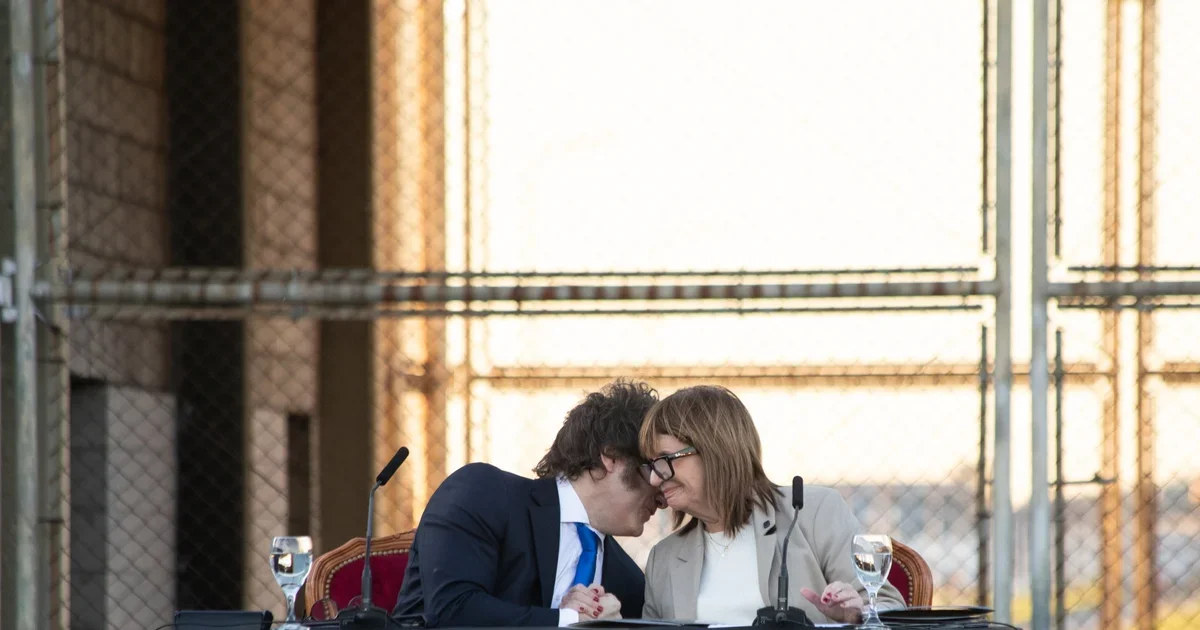
Technology
President Javier Milei delivered a masterclass in economics at Torcuato Di Tella University, addressing hundreds of students in an event that generated high demand, prompting a move to a larger venue due to rapid registration. During his presentation, Milei combined academic exposition with direct interaction with the youth, highlighting his previous academic background at the same institution. This gathering reflects student interest in the president and his focus on economic education.
By Derecha Diario
Politics
Javier Milei criticized "the politicians" during a class at the Torcuato Di Tella University, accusing them of prioritizing winning elections over the country's welfare. He also referred to former Minister Domingo Cavallo as "unpresentable" and defended his economic approach, emphasizing that his administration seeks to stabilize the Central Bank without taking shortcuts. Additionally, he anticipates a return of 500 million dollars in tax reductions if reelected and promised more deregulation in the future.
By El Cronista
Politics
Javier Milei will speak at the Torcuato Di Tella University, organized by the MENEM student center, which claims to be autonomous and non-partisan. The group has grown within the university and linked with the president through its organizers, who state that the invitation was made six months ago. The talk is expected to generate controversy, given the president's past remarks about the opposition.
By Perfil

Politics
President Javier Milei inaugurated a new evangelical temple in Neuquén and took the opportunity to send a political message linked to his electoral ambitions. In his speech, he defended his economic management and highlighted the importance of fiscal balance, criticizing populist practices. Milei emphasized that Argentinians must choose between continuing his administration's path or returning to a model that has led the country to stagnation.
By Perfil
How the media told it, compared with the official version. Framing estimated by AI.
El Cronista
Milei cargó contra “los políticos” que solo piensan en ganar elecciones y trató a Cavallo de “impresentable”iProfesional
Milei criticó a periodistas, cruzó a Cavallo y prometió bajar impuestos si es reelectoOn the other hand, iProfesional titled "Milei criticized journalists, confronted Cavallo, and promised to lower taxes if reelected". This outlet focuses on Milei's criticism of the press, mentioning his description of journalists as "beings laden with evil" while also announcing his tax promise. Its framing is the same: 60% left, 20% center, and 20% libertarian.